
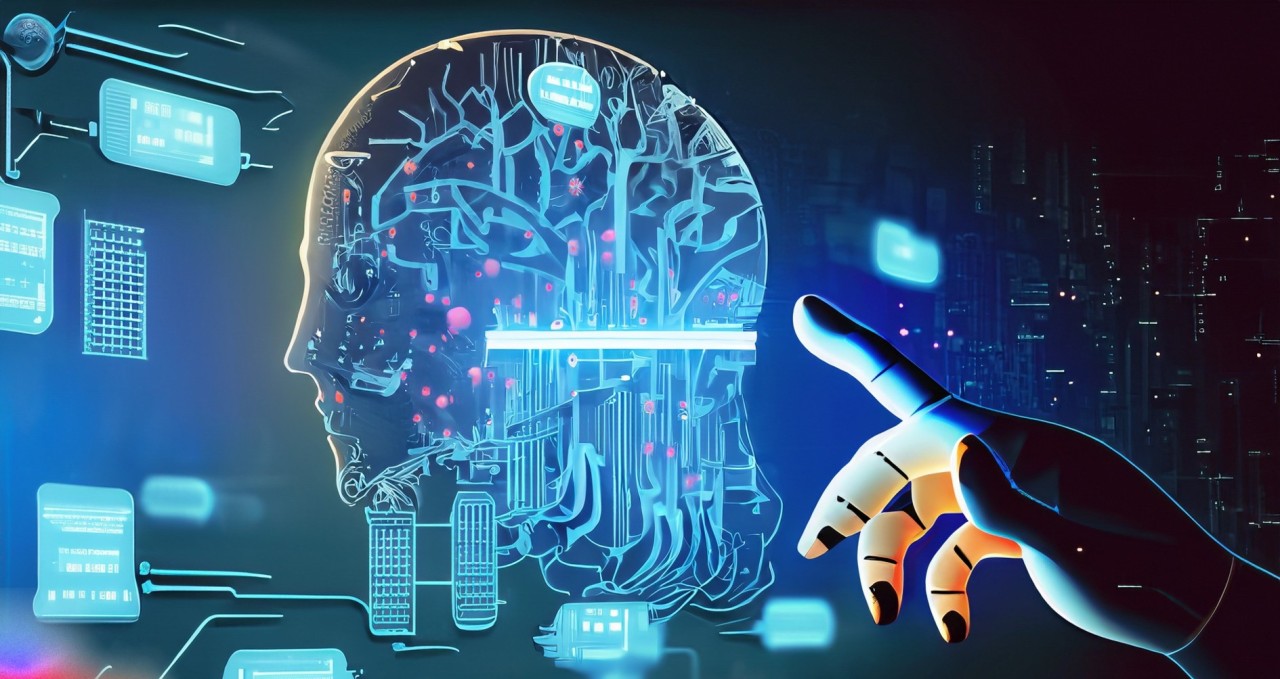
Artificial Intelligence (AI) has made remarkable strides in recent years, achieving feats once thought impossible. However, most of today’s AI systems still rely heavily on human oversight, guidance, and fine-tuning. True autonomy — where AI systems can function, adapt, and improve without human input — remains the ultimate goal.
The journey toward fully autonomous AI promises to transform industries, revolutionize workflows, and reshape the very fabric of human-machine collaboration.
This article explores how reducing human intervention is shaping the future of AI, the technologies driving this transformation, the challenges involved, and the vision of a world powered by truly autonomous systems.
Understanding Autonomous AI Systems
An autonomous AI system operates independently, making decisions and learning from its environment without relying on humans to provide constant supervision or intervention. These systems are capable of:
- Perceiving and interpreting complex data in real-time
- Analyzing situations and making informed decisions
- Learning from outcomes to refine future behavior
- Self-correcting and adapting to new, unforeseen scenarios
Unlike traditional AI, which is often limited by predefined rules or training data, autonomous AI systems must manage unpredictability and complexity with minimal human assistance.
Key Technologies Enabling Fully Autonomous AI
Several advanced technologies and methodologies are driving the shift toward reducing human intervention:
1. Reinforcement Learning (RL)
Reinforcement learning empowers AI systems to learn through experience by interacting with their environment. By receiving rewards or penalties for their actions, these systems gradually develop optimal strategies without needing explicit instructions.
2. Self-Supervised Learning
Self-supervised learning reduces reliance on labeled data. AI models learn patterns and relationships within raw data, allowing them to teach themselves useful representations that can be applied to various tasks.
3. Continual and Lifelong Learning
Continual learning enables AI systems to retain and build upon previous knowledge while adapting to new information. This approach avoids the problem of “catastrophic forgetting,” allowing AI to evolve over time much like humans do.
4. Federated Learning
Federated learning allows AI to train across decentralized devices without centralizing data. This not only improves privacy but also enables AI to learn from diverse sources independently, scaling learning without centralized human intervention.
5. Neuro-Symbolic AI
Combining neural networks with symbolic reasoning, neuro-symbolic AI brings together the strengths of pattern recognition and logical reasoning, enhancing decision-making capabilities without heavy human-defined logic structures.
Applications of Fully Autonomous AI
The practical implications of fully autonomous AI are vast and transformative across industries:
Autonomous Vehicles
Self-driving cars exemplify the need for full autonomy, where vehicles must navigate complex environments, interpret unpredictable behavior, and make life-critical decisions without human input.
Healthcare Diagnostics
AI systems that autonomously interpret medical images, recommend treatments, and even monitor patient health can significantly reduce the burden on healthcare professionals while improving outcomes.
Smart Manufacturing
Autonomous robots and systems in manufacturing can self-optimize production lines, identify maintenance needs, and adapt to new manufacturing processes without manual reprogramming.
Finance and Trading
AI-driven trading algorithms that adapt to shifting market conditions without needing constant recalibration from human analysts are redefining the finance industry.
Space Exploration
In environments where human intervention is impossible or delayed, such as deep space, fully autonomous AI systems are essential for navigation, research, and survival.
Benefits of Reducing Human Intervention in AI
Transitioning toward fully autonomous AI systems presents numerous benefits:
- Increased Efficiency: Automation of complex decision-making processes leads to faster, more consistent results.
- Scalability: Systems that learn and adapt independently can be deployed across diverse environments without custom configuration.
- Cost Savings: Reducing the need for human oversight lowers operational costs.
- Resilience and Adaptability: Autonomous AI can quickly respond to changes, failures, and new challenges without external guidance.
- Innovation: Freed from the constraints of manual programming, AI systems can explore novel solutions and optimize themselves beyond human-imposed limitations.
Challenges on the Path to Full Autonomy
Despite the enormous potential, achieving full AI autonomy is not without hurdles:
Safety and Reliability
Without human oversight, ensuring that AI systems make safe and ethical decisions is critical. Unchecked autonomous behavior could lead to unintended consequences.
Explainability and Transparency
Fully autonomous systems must be able to explain their decisions and actions. Understanding AI reasoning is essential for trust and accountability.
Ethical and Legal Considerations
The legal and ethical frameworks for decision-making by AI, particularly in critical fields like healthcare, law enforcement, and transportation, are still evolving.
Technical Complexity
Building AI systems that can generalize, adapt, and learn without supervision across varied tasks and environments is one of the greatest technical challenges.
The Vision of Complete AI Autonomy
The future of AI is one where systems are no longer limited by human-defined boundaries.
Imagine a world where:
- Cities are managed by autonomous systems optimizing traffic, energy, and waste in real-time.
- Personalized education platforms evolve with each learner’s progress and needs without teacher reprogramming.
- Healthcare systems monitor, diagnose, and even predict health crises before they happen, all autonomously.
Complete AI autonomy could free human beings from repetitive tasks and decision-making burdens, allowing society to focus more on creativity, strategy, and emotional intelligence — areas where human skills remain uniquely powerful.
Autonomous AI promises a future where machines are trusted collaborators, continually learning, evolving, and innovating alongside humanity.
Achieving this future will require not only technological breakthroughs but also thoughtful governance, ethical foresight, and a commitment to building systems that align with human values.
Conclusion
Reducing human intervention in AI systems is not just about efficiency; it is about unlocking the true potential of artificial intelligence. Fully autonomous AI represents a transformative shift, one where technology can dynamically learn, adapt, and thrive independently.
While challenges remain, the vision of complete AI autonomy is becoming clearer.
It is a future where AI doesn’t just respond to our commands but grows and collaborates with us to build a smarter, more resilient world.
The journey toward fully autonomous AI has begun — and its possibilities are as limitless as our ambition.