

In a world where consumers are bombarded with information and choices, personalization has become the key to standing out. But personalization is no longer just about addressing someone by their name in an email or suggesting products based on broad demographics.
The new era of customer experience is driven by hyper-personalization, enabled by Artificial Intelligence (AI). This approach goes beyond segmentation and static rules it leverages real-time data, predictive analytics, and machine learning to create truly individualized journeys.
What Exactly is Hyper-Personalization?
Hyper-personalization is the AI-driven evolution of personalization. While traditional personalization relies on limited, static data (like location or past purchases), hyper-personalization:
- Uses real-time behavioral, transactional, and contextual data.
- Adapts dynamically to changes in customer intent and mood.
- Delivers proactive, predictive experiences, not just reactive ones.
For example:
- A retail app can recommend products not only based on your purchase history but also on the weather in your city, time of day, and trending items in your social circle.
- A healthcare app can nudge you with tailored diet tips based on your medical records, current fitness data, and daily activity.
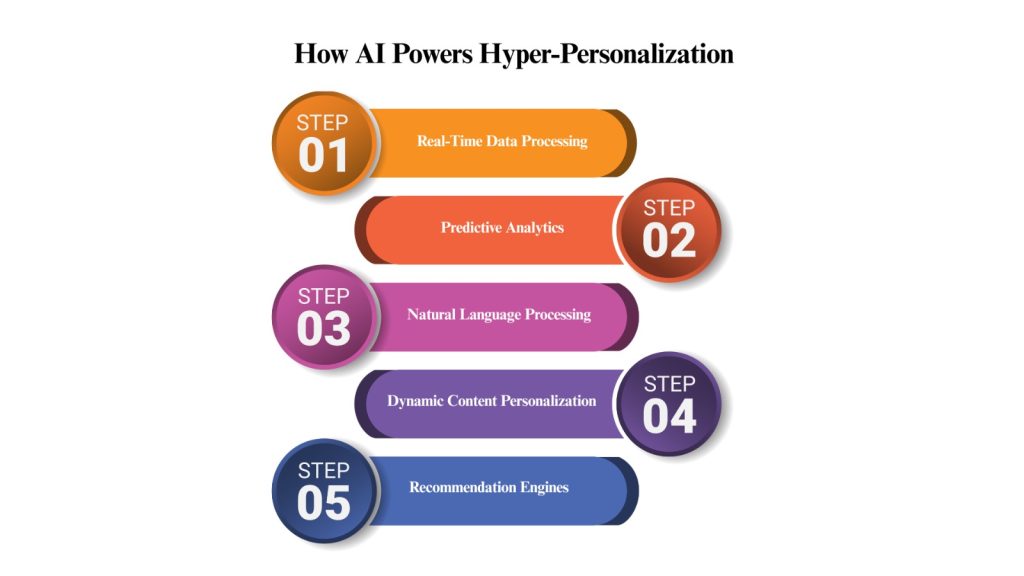
How AI Powers Hyper-Personalization?
AI is the enabler that makes hyper-personalization possible at scale:
1. Real-Time Data Processing
AI can analyze millions of data points instantly from browsing history to live interactions allowing businesses to react in real time.
2. Predictive Analytics
Machine learning identifies patterns and predicts future behavior. For instance, an e-commerce platform can anticipate when a customer might need to reorder a product.
3. Natural Language Processing (NLP)
NLP allows businesses to understand customer sentiment and intent from emails, chats, and social media, enabling more natural interactions.
4. Dynamic Content Personalization
AI adjusts emails, app interfaces, ads, and website layouts in real time, ensuring every touchpoint feels unique.
5. Recommendation Engines
Advanced algorithms suggest not just similar products, but complementary, context-aware options, improving cross-selling and upselling.
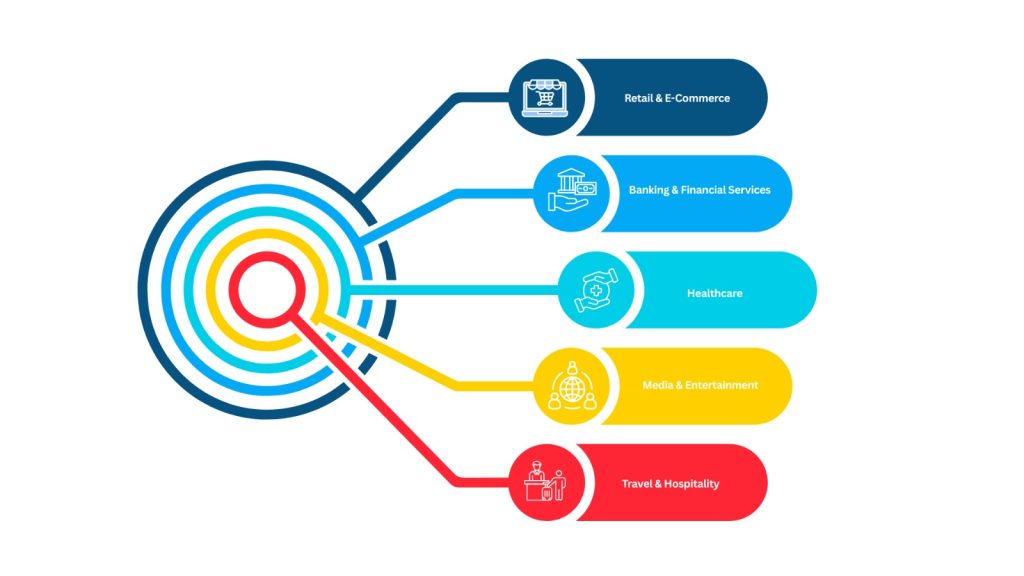
Industry Applications of Hyper-Personalization
🔹 Retail & E-Commerce
- Personalized product bundles based on browsing, purchase history, and customer lifecycle stage.
- Geo-targeted offers triggered when a shopper enters a store.
🔹 Banking & Financial Services
- Tailored financial wellness tips, spending insights, and credit offers based on individual behavior.
- Fraud alerts customized to a customer’s unique spending patterns.
🔹 Healthcare
- Custom treatment reminders aligned with patient history.
- Wearable devices sending AI-driven health alerts to doctors and patients.
🔹 Media & Entertainment
- Streaming services like Netflix and Spotify curating playlists and shows aligned with real-time preferences.
- News apps adjusting feeds based on reader engagement and sentiment.
🔹 Travel & Hospitality
- Dynamic pricing and offers based on seasonality, location, and traveler intent.
- Personalized itineraries built on past bookings and travel behaviors.
Benefits of Hyper-Personalization
✔ Higher Engagement: Customers interact more with brands that “get them.”
✔ Increased Conversions: Relevant offers drive stronger purchase decisions.
✔ Customer Loyalty: Consistently tailored experiences create long-term trust.
✔ Operational Efficiency: AI automates complex personalization tasks.
✔ Revenue Growth: Better targeting and cross-sell/upsell strategies directly boost sales.
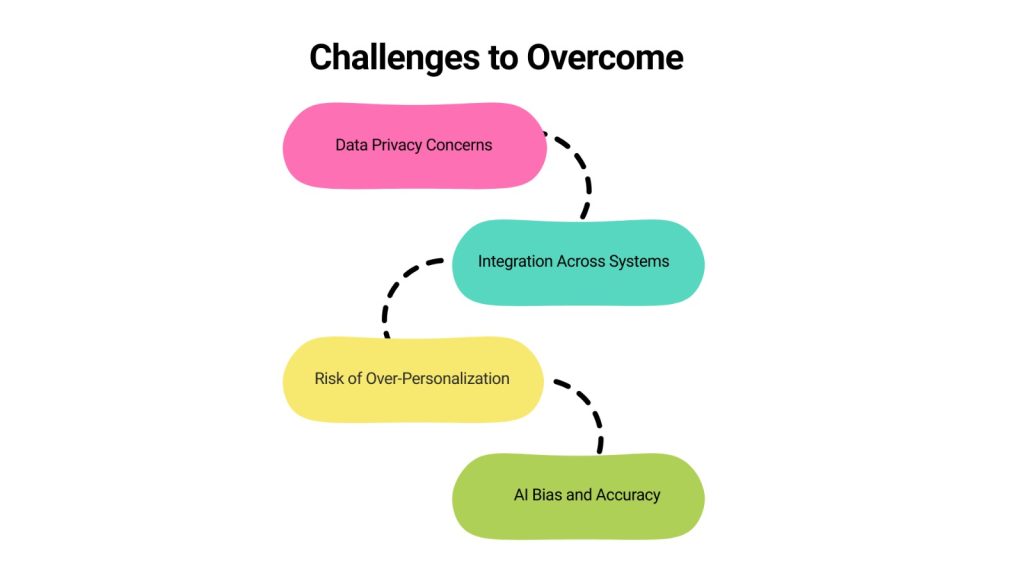
Challenges to Overcome
Hyper-personalization isn’t without risks and hurdles:
- Data Privacy Concerns
Collecting and using sensitive personal data raises compliance issues (GDPR, CCPA, HIPAA). Transparency and consent are critical. - Integration Across Systems
Businesses often struggle to unify data from CRM, ERP, IoT devices, and digital channels. - Risk of Over-Personalization
When brands know “too much,” it can feel intrusive or even creepy. Balance is essential. - AI Bias and Accuracy
Poorly trained AI models can misinterpret intent or reinforce biases, damaging customer trust.
The Future of Hyper-Personalization
The evolution of hyper-personalization will be shaped by:
- AI + IoT Synergy: Wearables, smart homes, and connected cars feeding contextual data into personalization engines.
- Conversational AI: Chatbots and virtual assistants delivering truly human-like, individualized support.
- Emotion AI: Systems that detect and adapt to a user’s emotional state in real time.
- Augmented & Virtual Reality (AR/VR): Personalized immersive experiences in gaming, retail, and training.
- Proactive Experiences: AI anticipating needs before customers even recognize them (e.g., reminding you of upcoming expenses or suggesting preventive healthcare measures).