
In an era where Operational Technology (OT) systems underpin critical infrastructure—from power grids and water treatment facilities to oil & gas operations and automated manufacturing lines—the stakes for cybersecurity have never been higher. As organizations modernize and digitally transform, the convergence of Information Technology (IT) and OT environments has unlocked new efficiencies but also dramatically expanded the attack surface. Traditional perimeter-based security models, once sufficient in isolated OT ecosystems, are no longer adequate to defend against today’s sophisticated threat landscape.
Modern adversaries now leverage advanced ransomware campaigns, zero-day vulnerabilities, supply-chain exploits, and even AI-generated attack vectors capable of bypassing conventional defenses. These threats not only target data but can also disrupt physical processes, jeopardize safety, compliance, and national security. In response, industries are shifting toward a comprehensive, multi-layered cybersecurity strategy specifically tailored for critical OT environments.
This next-generation approach combines the predictive power of Artificial Intelligence, the physical security assurance of Data Diodes, and the rigid access controls of Zero Trust Architecture. AI-driven analytics enhance real-time monitoring, anomaly detection, and threat response, enabling faster and more accurate identification of cyber-physical risks. Data Diodes introduce unidirectional data flow to protect critical networks from external intrusions while still allowing essential data monitoring and reporting. Meanwhile, Zero Trust principles remove implicit trust from the network, ensuring every user, device, asset, and connection is continuously verified.
1. Artificial Intelligence: Enhancing Threat Detection and Response
Artificial Intelligence has become a cornerstone of modern OT cybersecurity, offering capabilities far beyond traditional monitoring tools. In complex industrial environments where massive volumes of sensor data, operational logs, and network traffic must be continuously analyzed, AI enables rapid and precise threat identification.
AI strengthens OT security through:
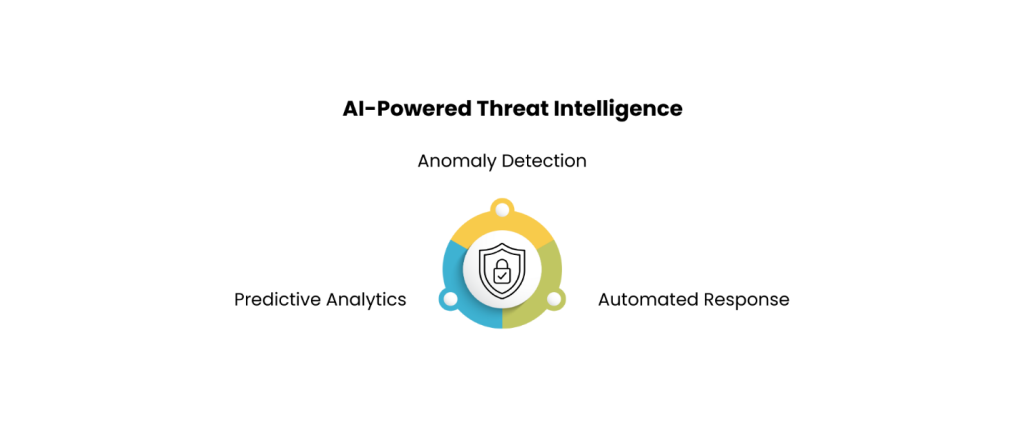
- Anomaly Detection:
Machine learning algorithms continuously study normal system behavior—such as equipment vibration patterns, communication frequencies, or operator activities—and immediately flag deviations that may indicate cyber intrusions or equipment tampering. - Predictive Analytics:
By identifying subtle trends and correlating historical attack patterns, AI systems can predict vulnerabilities, potential intrusion paths, and emerging threats before they occur, empowering organizations to take proactive defensive measures. - Automated Response:
AI-driven security platforms can autonomously isolate compromised devices, block malicious traffic, or trigger containment protocols within milliseconds, drastically reducing the gap between threat detection and mitigation.
Industry Example:
TXOne Networks applies AI-driven monitoring specifically designed for Industrial Control Systems (ICS), ensuring real-time detection of malware, communication anomalies, and cyber-physical threats without disrupting operations.
2. Data Diodes: Ensuring One-Way Data Flow for Enhanced Security
Data Diodes offer one of the most reliable hardware-based protections for OT networks, creating a secure, unidirectional gateway that physically enforces one-way data movement. This eliminates the possibility of external commands or malicious traffic entering critical OT systems.
Key advantages include:
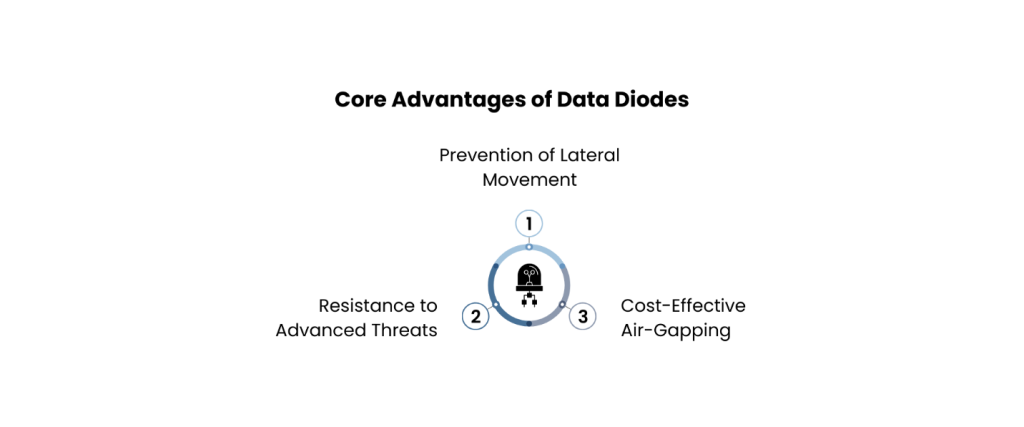
- Prevention of Lateral Movement:
Even if the IT network is compromised, attackers cannot pivot into OT environments because the hardware enforces a literal physical break, allowing data to move only outward. - Resistance to Advanced Threats:
Unlike software firewalls, Data Diodes cannot be bypassed by malware, zero-day exploits, or AI-generated attack vectors, making them highly effective against sophisticated cyber adversaries. - Cost-Effective Air-Gapping:
They provide the security of air-gapped systems with the added benefit of enabling essential outbound data such as logs, performance metrics, or SCADA monitoring feeds.
3. Zero Trust Architecture: “Never Trust, Always Verify”
Zero Trust Architecture (ZTA) is redefining OT security by eliminating implicit trust—whether users or devices are inside or outside the network. Instead, every request is rigorously verified, reducing the risk of insider threats or unauthorized lateral movements.
Zero Trust in OT environments consists of:
- Micro-Segmentation:
Breaking large OT networks into smaller, isolated zones prevents attackers from moving freely, containing breaches within limited segments. - Least Privilege Access:
Access is granted strictly based on necessity. Operators, remote vendors, and devices receive only the permissions required to perform their tasks. - Continuous Monitoring and Validation:
Authentication and authorization occur continuously, using identity, device posture, environment, and behavior to validate every interaction.
Industry Adoption:
Rockwell Automation strongly advocates Zero Trust practices in industrial environments, emphasizing segmentation strategies such as Industrial Demilitarized Zones (IDMZ) to safeguard critical assets.
4. Integrating AI, Data Diodes & Zero Trust: A Holistic Defense Strategy
When combined, AI, Data Diodes, and Zero Trust create a layered, end-to-end defense approach capable of protecting even the most complex industrial ecosystems.
- AI provides real-time situational awareness, predictive intelligence, and automated threat response.
- Data Diodes enforce physical separation, ensuring that critical OT assets remain unreachable from external networks.
- Zero Trust enforces strict authentication, segmentation, and access control across all users and devices.
This integrated framework aligns closely with recommendations from the National Security Agency (NSA), which stresses the importance of segmentation, continuous monitoring, and Zero Trust principles to secure critical OT environments against nation-state and AI-assisted cyberattacks.
5. Real-World Applications and Case Studies
- Nuclear Power Plants:
The Idaho National Laboratory (INL) has developed an AI-enabled Zero Trust framework specifically for nuclear OT systems, enhancing malware prevention, anomaly detection, and identity-based access control. - Power Grids:
Research into AI-driven Zero Trust strategies for grid security shows that Generative Adversarial Networks (GANs) can be used to simulate sophisticated attacks, enabling operators to strengthen defenses and anticipate vulnerabilities within supply chains. - Manufacturing:
Companies such as TXOne Networks implement AI-powered Zero Trust solutions in manufacturing environments to safeguard ICS equipment and ensure continuous uptime, even under active cyber threats.
6. Challenges and Key Considerations
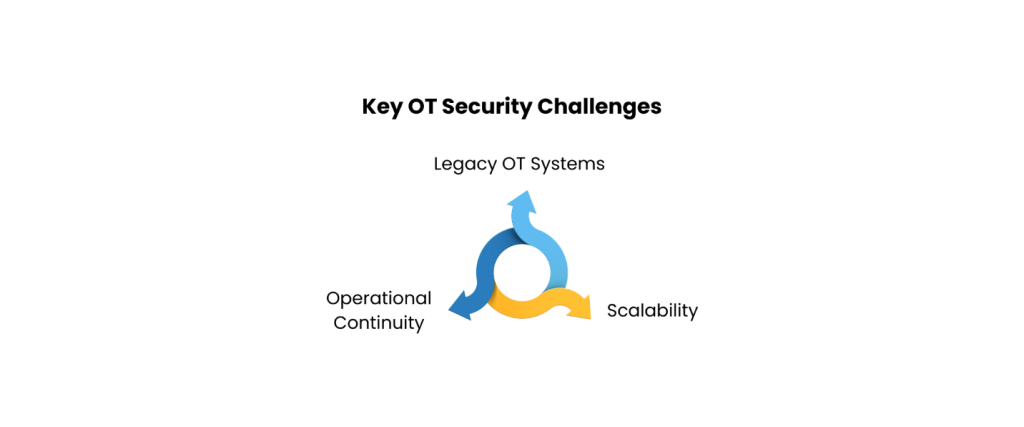
Despite the advantages, organizations must navigate several challenges when integrating these technologies:
- Legacy OT Systems:
Many industrial devices lack modern security features, requiring careful integration strategies to avoid incompatibility or operational risk. - Operational Continuity:
Security enhancements must be deployed without interrupting production processes, safety controls, or regulatory compliance. - Scalability:
As OT networks expand and digital transformation accelerates, cybersecurity solutions must scale seamlessly while adapting to evolving threats.
Conclusion
The convergence of AI, Data Diodes, and Zero Trust Architecture marks a transformative shift in how industries secure their Operational Technology environments. This fusion creates a robust, multi-layered defense capable of detecting, preventing, and responding to even the most advanced cyber threats. By integrating intelligent analytics, hardware-enforced isolation, and stringent access control, organizations can significantly strengthen their resilience against ransomware, zero-day exploits, insider risks, and AI-driven attacks.
This next-generation security model not only fortifies the digital perimeter but also protects the physical processes that keep critical infrastructure running—ensuring operational continuity, regulatory compliance, and safety at scale. As cyber-physical systems become increasingly interconnected, adopting such a holistic approach is no longer optional; it is essential for maintaining the reliability of power grids, manufacturing plants, transportation systems, and other mission-critical sectors.