
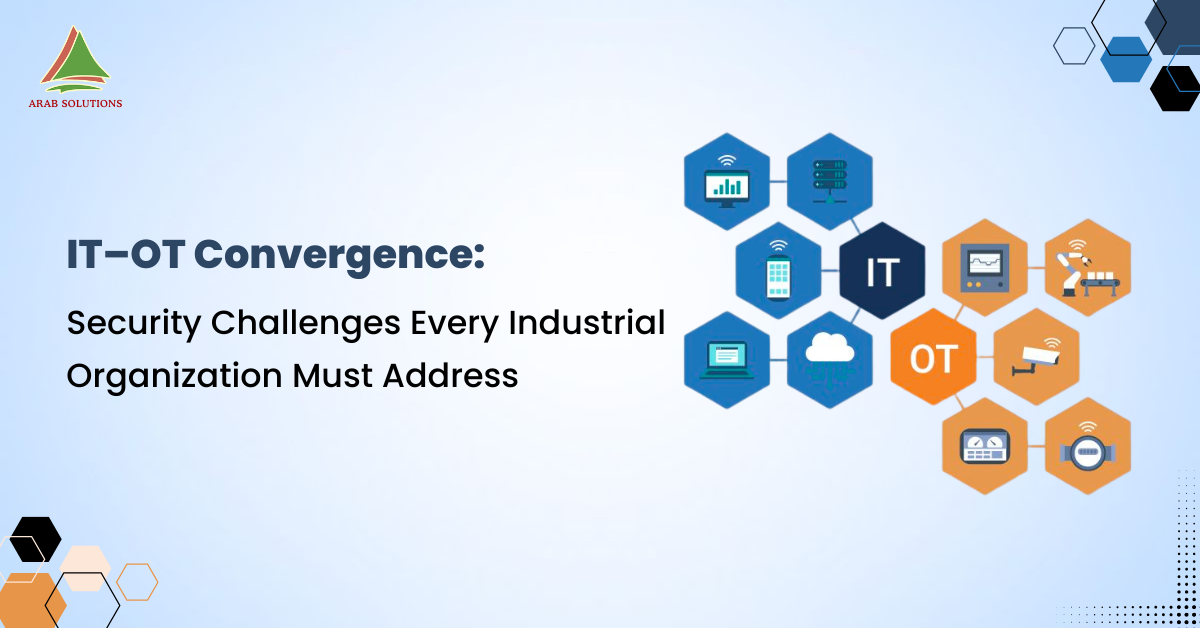
The digital transformation of industrial enterprises has moved far beyond traditional automation. Today, organizations are integrating Information Technology (IT) with Operational Technology (OT) to improve efficiency, unlock real-time data, automate operations, and advance predictive maintenance. This connected ecosystem—spanning enterprise networks, cloud platforms, industrial control systems (ICS), and IIoT devices—creates opportunities for innovation, but also exposes industrial operations to unprecedented cybersecurity risks.
As the line between IT and OT blurs, organizations must adopt new security strategies to protect their production environments, personnel safety, and business continuity.
This comprehensive blog explores the rising cyber threats, core challenges, and actionable security controls that every industrial organization must implement to secure IT–OT convergence.
1. Understanding IT–OT Convergence
IT–OT convergence refers to the strategic integration of:
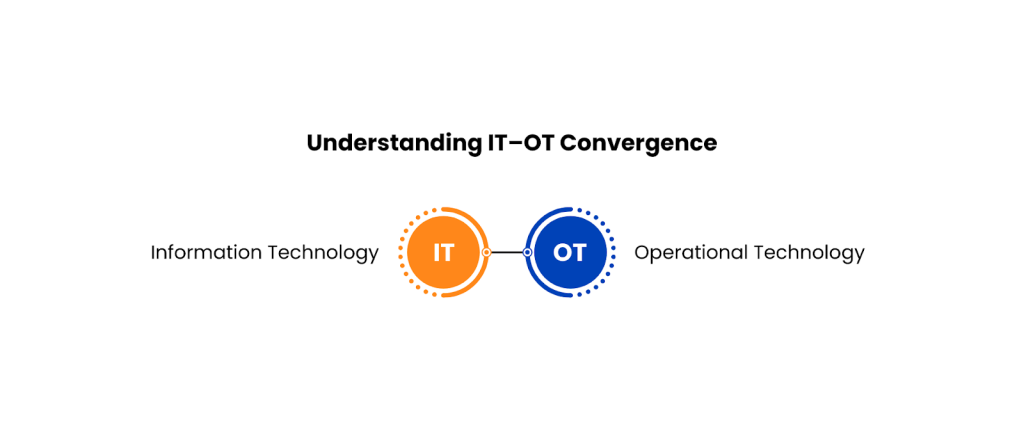
- Information Technology (IT):
Enterprise applications, cloud, networks, email, ERP, user devices, data centers. - Operational Technology (OT):
ICS components such as SCADA, PLCs, HMIs, DCS, sensors, actuators, field devices, and machine controllers.
While IT focuses on data protection, confidentiality, and business processes, OT emphasizes reliability, availability, and safety.
Historically, OT systems were isolated (“air-gapped”). Today, they are connected for:
- Remote operations
- Predictive analytics
- Edge and cloud integration
- Asset performance management
- Supply chain and production optimization
This convergence dramatically transforms industrial operations—but also increases cyber exposure.
2. The New Threat Landscape in Converged Environments
Modern attacks target OT environments with precision and purpose.
2.1 Ransomware Targeting Industrial Operations
Attackers exploit IT networks and pivot into OT, forcing downtime in:
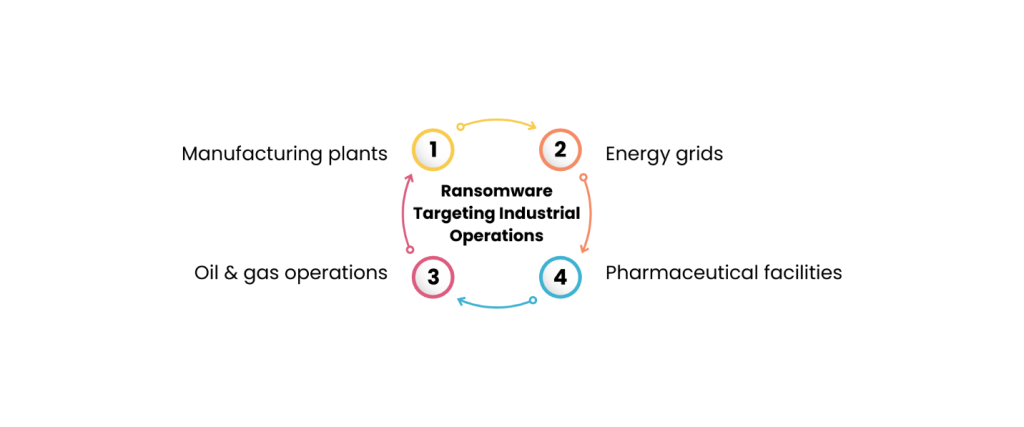
- Manufacturing plants
- Energy grids
- Oil & gas operations
- Pharmaceutical facilities
Examples: Colonial Pipeline, Norsk Hydro.
2.2 State-Sponsored Cyber Espionage & Sabotage
Nation-state groups target ICS for destruction or control.
Notable incidents:
- Triton/Trisis – Safety systems targeted
- Stuxnet – PLC manipulation
- Industroyer/CrashOverride – Power grid disruption
2.3 ICS Malware & Zero-Day Exploits
Malware families designed specifically for OT protocols (Modbus, DNP3) are becoming more advanced.
2.4 Compromised Supply Chain & Firmware
Industrial companies rely on hundreds of OEMs. A compromised firmware update or vendor access session can introduce hidden vulnerabilities.
2.5 IIoT Expansion Increases the Attack Surface
Insecure IoT sensors, gateways, and controllers expose networks through:
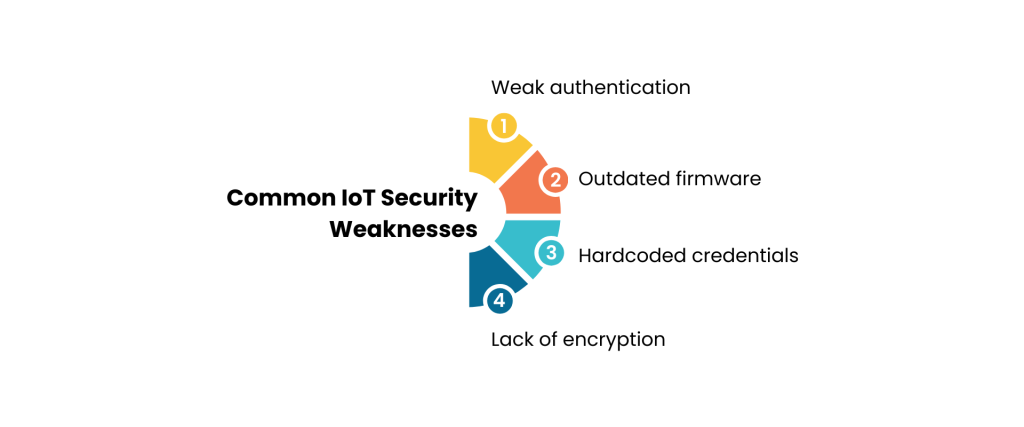
- Weak authentication
- Outdated firmware
- Hardcoded credentials
- Lack of encryption
OT is now a prime target—and convergence magnifies the risks.
3. Key Security Challenges Industrial Organizations Must Address
3.1 Legacy OT Systems Designed Without Security in Mind
Legacy ICS components—PLCs, SCADA servers, RTUs—were built for stability, not cybersecurity.
Common issues:
- Use of outdated OS (Windows XP/7)
- Inability to patch or update
- Proprietary protocols lacking encryption
- Default or hardcoded passwords
- Unsupported hardware nearing end-of-life
These legacy systems become “weak links” that attackers exploit.
3.2 Expanded Attack Surface Through IT–OT Connectivity
When OT networks connect to:
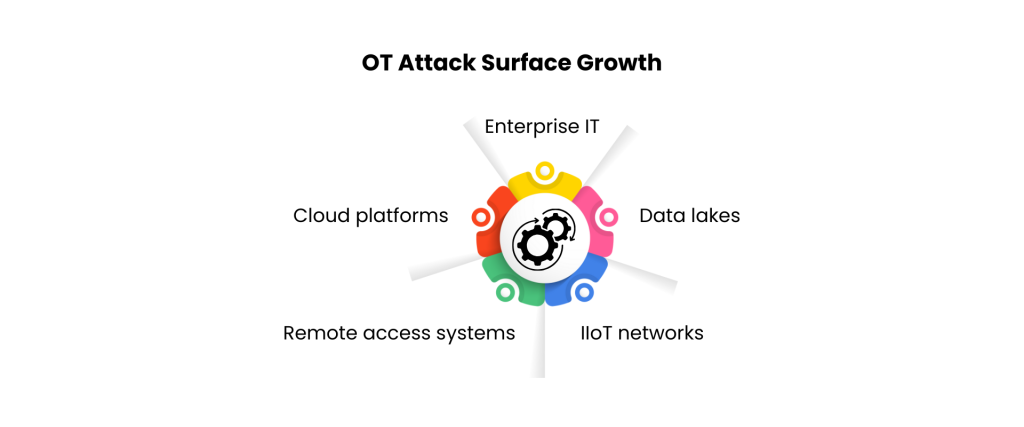
- Enterprise IT
- Cloud platforms
- Data lakes
- Remote access systems
- IIoT networks
…the attack surface expands exponentially.
Even a small misconfiguration—like an exposed port or unsecured API—can allow attackers to move from IT to OT.
3.3 Lack of Proper Network Segmentation
Many industrial environments still operate with flat networks where all devices are interconnected.
Risks include:
- Rapid lateral movement
- Opportunity for attackers to reach PLCs/control systems
- No isolation between critical and non-critical assets
- Difficulty in applying granular controls
Segmentation is foundational—but often missing.
3.4 Limited Visibility & Asset Inventory Gaps
Most industrial operators cannot fully answer:
- What assets exist in the OT network?
- What firmware/software versions are running?
- Which devices are vulnerable or exposed?
- What communication patterns are normal or abnormal?
OT visibility is difficult because:
- Devices cannot be scanned aggressively
- Systems must run 24/7
- Logging is limited or absent
- Protocols are proprietary
3.5 Insecure Remote Access & Vendor Connections
Industrial environments rely heavily on external vendors and support engineers.
Common risks:
- Shared remote access accounts
- No MFA or session monitoring
- Weak VPN configurations
- Direct access to PLCs or controllers
- Unmonitored RDP/VNC sessions
- Third-party laptops introducing malware
Remote access is one of the top attack vectors in OT breaches globally.
3.6 Human Error, Skill Gaps & Misaligned Priorities
IT teams understand cybersecurity but lack ICS operational context.
OT teams understand processes but often lack cybersecurity expertise.
This divergence leads to:
- Misconfigured controls
- Operational workarounds
- Unsecured endpoints
- Delayed patching due to uptime constraints
Plus, contractors often bypass controls to maintain production schedules.
3.7 Weak Governance & Lack of Unified Security Ownership
IT and OT typically report to different leaders:
- CIO focuses on data and corporate systems
- COO/Plant manager focuses on production uptime
This leads to:
- Conflicting priorities
- Fragmented responsibilities
- Lack of unified policies
- Gaps in compliance efforts
Modern industrial cybersecurity demands central governance with shared accountability.
3.8 Safety Risks & High Availability Requirements
In OT, cyberattacks can cause:
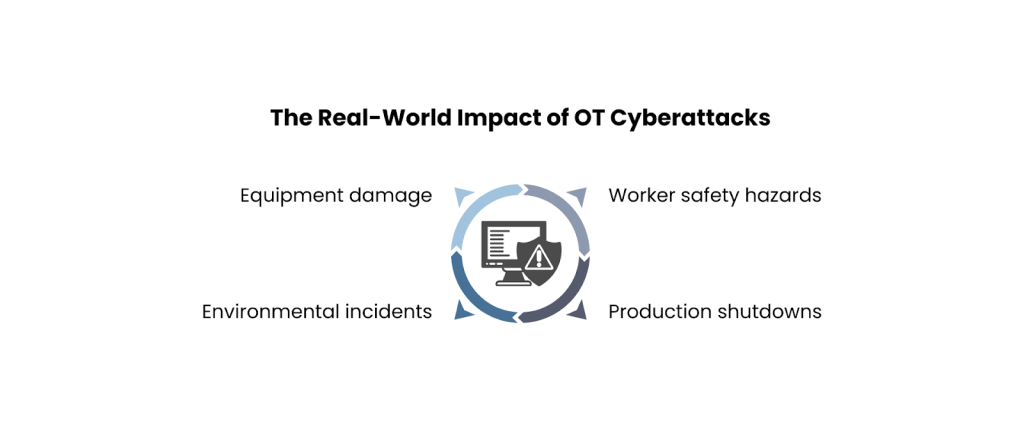
- Equipment damage
- Worker safety hazards
- Environmental incidents
- Production shutdowns
Security tools must not impact uptime. This constraint makes implementing controls more complex than in modern IT environments.
4. Strategies to Secure IT–OT Convergence
4.1 Build a Comprehensive Asset Inventory
Use passive OT monitoring tools to identify:
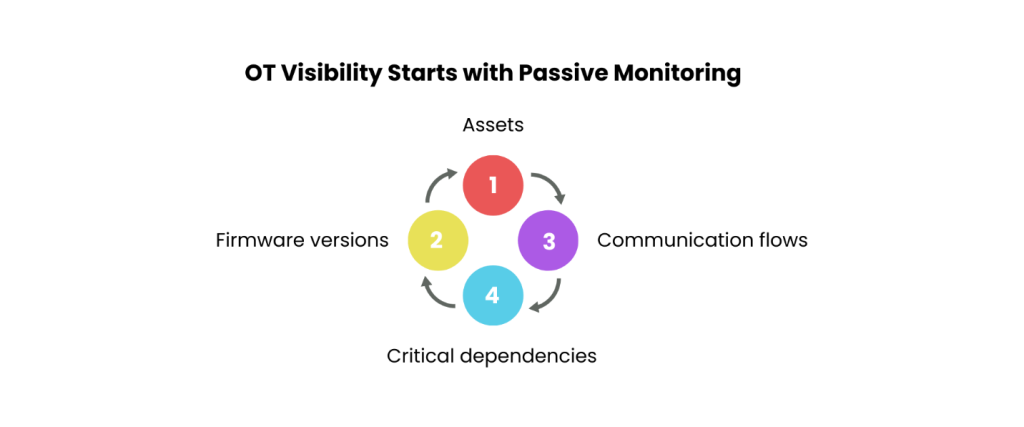
- Assets
- Firmware versions
- Communication flows
- Critical dependencies
Visibility enables risk-based prioritization.
4.2 Implement Deep Network Segmentation & Zero Trust
Key steps:
- Separate IT and OT with strict firewalls
- Create OT DMZ for secure data transfer
- Use micro-segmentation between ICS zones
- Whitelist essential traffic only
- Enforce least privilege access
This limits attacker lateral movement.
4.3 Strengthen Identity & Access Management (IAM)
Implement:
- Multi-factor authentication (MFA)
- Role-based access control (RBAC)
- Privileged Access Management (PAM)
- Password rotation
- Vendor session recording
- Just-in-time access
Every access request should be authenticated, authorized, and monitored.
4.4 Continuous Monitoring & Threat Detection in OT
Deploy OT-native monitoring solutions that support:
- Passive traffic inspection
- ICS anomaly detection
- Deep packet inspection for OT protocols
- Baseline behavior mapping
- OT intrusion detection systems (IDS)
- Integration with IT SIEM/SOAR
Monitoring is essential for early detection of malicious activity.
4.5 Secure Configuration & Patch Management
Where patching is difficult:
- Virtual patching (IPS/IDS)
- Hardening devices (disable unused services)
- Network isolation of unpatchable assets
- Implementing compensating controls
For patchable systems:
- Controlled maintenance windows
- Testing patches in sandbox environments
4.6 Strengthen Supply Chain & Third-Party Security
Mitigate risk through:
- Vendor cybersecurity assessments
- Secure procurement processes
- Signed firmware/software
- Restricted vendor access
- Monitoring remote sessions
- Reviewing software bills of materials (SBOM)
Supply chain compromise is now one of the top ICS risks.
4.7 Develop an OT-Specific Incident Response Plan
A cyber incident in OT must prioritize safety first, then availability, then data recovery.
An effective OT incident response plan includes:
- ICS-specific playbooks
- Clear escalation paths
- Coordination with operations & safety teams
- Backup and recovery for PLC/HMI configurations
- Isolation strategies that avoid production shutdowns
- Forensics methods that don’t damage fragile OT devices
4.8 Foster Collaboration Between IT & OT Teams
Industrial cybersecurity requires cultural change.
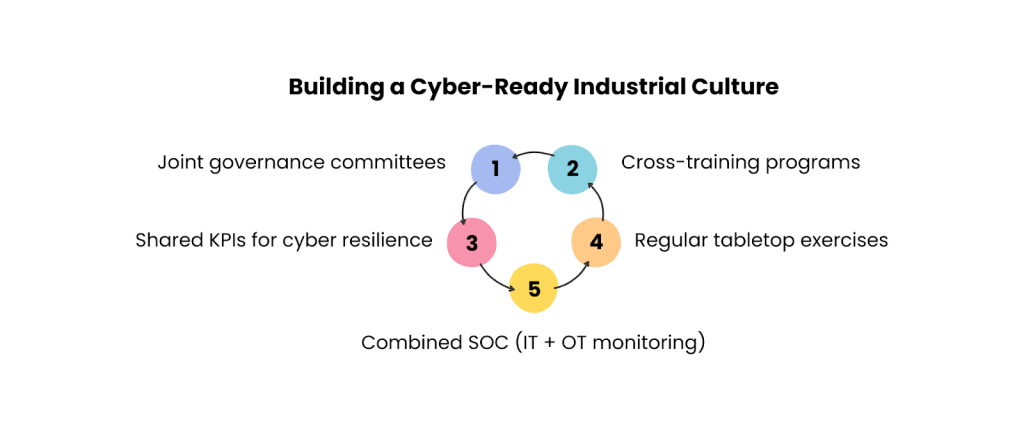
Best practices:
- Joint governance committees
- Cross-training programs
- Shared KPIs for cyber resilience
- Regular tabletop exercises
- Combined SOC (IT + OT monitoring)
Bridging this gap is essential for long-term resilience.
5. Future of IT–OT Security: Emerging Trends
5.1 AI & Machine Learning for OT Security
Predictive threat detection based on behavior analytics.
5.2 Secure Industrial Edge Computing
Edge nodes must include encryption, secure boot, and trusted runtime.
5.3 Autonomous Security Operations in OT
Next-gen OT security platforms will enable automated isolation & threat containment.
5.4 Converged IT–OT SOCs
Unified monitoring improves speed of detection and reduces operational blind spots.
5.5 Quantum-Resistant Encryption
Industrial communication protocols will adopt cryptography designed for the post-quantum era.
6. Conclusion
IT–OT convergence is reshaping modern industrial enterprises by unlocking real-time data, enhancing productivity, and enabling digital transformation. But this integration also amplifies cyber risks—especially as threat actors increasingly target critical infrastructure.
To secure converged environments, organizations must adopt:
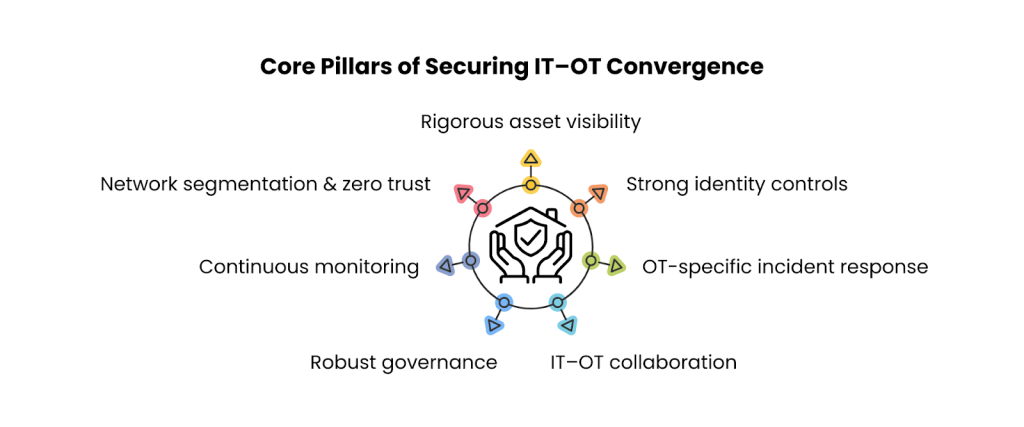
- Rigorous asset visibility
- Network segmentation & zero trust
- Strong identity controls
- Continuous monitoring
- OT-specific incident response
- Robust governance
- IT–OT collaboration
Industrial cybersecurity is no longer optional—it is a business imperative linked directly to operational resilience, safety, and national security.
Organizations that address these challenges proactively will not only safeguard their
infrastructure but also build a strong foundation for advanced automation and future-proof digital innovation.