
Modern IT infrastructure has evolved far beyond traditional data centers. What was once a contained, perimeter-based network is now a sprawling ecosystem of cloud platforms, remote users, SaaS applications, edge devices, and hybrid environments. While this transformation has enabled agility and scale, it has also introduced a less visible—but deeply impactful—challenge: network complexity.
This complexity is not just a technical inconvenience. It directly affects operational efficiency, security posture, cost structures, and strategic decision-making at the leadership level. Organizations that fail to recognize and manage this hidden cost often find themselves slower, more vulnerable, and more expensive to operate.
The Operational Burden of Complexity
As networks expand, operations become increasingly fragmented. Teams are forced to manage:
- Multiple cloud providers and environments
- Legacy on-prem systems alongside modern architectures
- Diverse networking tools with overlapping functions
- Distributed endpoints across geographies
This fragmentation leads to operational inefficiencies in several ways:
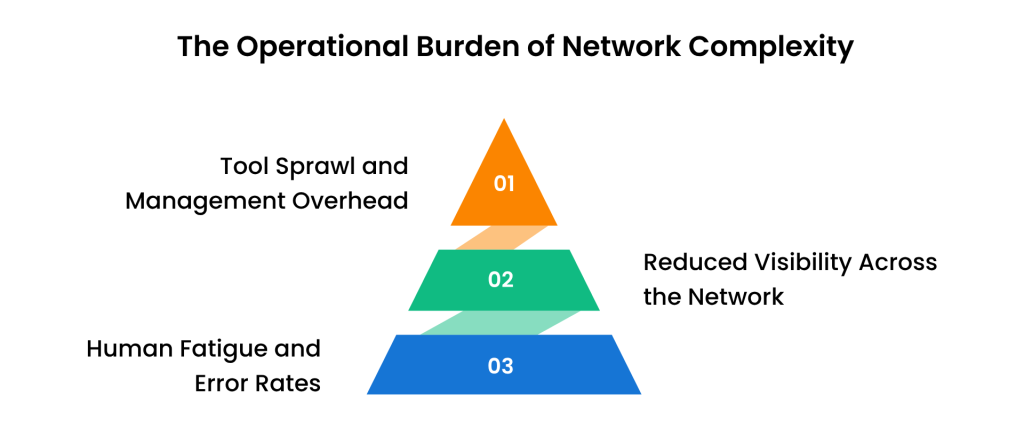
1. Tool Sprawl and Management Overhead
Organizations often deploy different tools for monitoring, security, performance, and compliance. Over time, this creates a disconnected ecosystem where:
- Data is siloed
- Troubleshooting requires multiple dashboards
- Teams duplicate efforts
The result is slower incident response and increased reliance on specialized expertise.
2. Reduced Visibility Across the Network
Operations teams struggle to maintain a unified view. Instead of a single source of truth, they deal with partial visibility across environments. This leads to:
- Delayed root cause analysis
- Increased mean time to resolution (MTTR)
- Reactive, rather than proactive, operations
3. Human Fatigue and Error Rates
Complex systems demand constant manual intervention. The more moving parts involved, the higher the likelihood of:
- Misconfigurations
- Policy inconsistencies
- Operational errors
Over time, this increases risk while reducing team productivity.
Security Blind Zones in Hybrid Networks
Hybrid environments—combining on-prem, cloud, and edge—have become the norm. However, they introduce security blind spots that traditional models were never designed to handle.
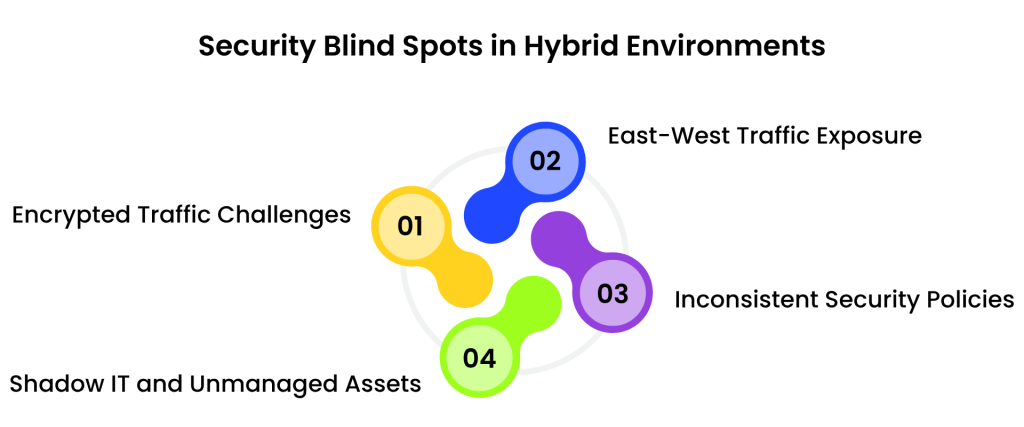
1. Encrypted Traffic Challenges
A significant portion of modern network traffic is encrypted. While encryption enhances privacy, it also limits visibility into potential threats. Without proper inspection mechanisms:
- Malicious payloads can pass undetected
- Threat detection systems become less effective
2. East-West Traffic Exposure
In cloud and hybrid environments, traffic doesn’t just flow in and out (north-south); it moves laterally (east-west). Many organizations lack visibility into this internal movement, leading to:
- Undetected lateral attacks
- Increased dwell time for attackers
3. Inconsistent Security Policies
Different environments often have different security controls. This inconsistency creates gaps where:
- Policies are misaligned
- Threats exploit weaker segments of the network
4. Shadow IT and Unmanaged Assets
As teams prioritize speed, they often deploy services without centralized oversight. This creates:
- Untracked assets
- Unknown vulnerabilities
- Compliance risks
The Rising Cost of Distributed Environments
Complexity doesn’t just impact performance—it significantly increases costs, often in ways that are not immediately visible.
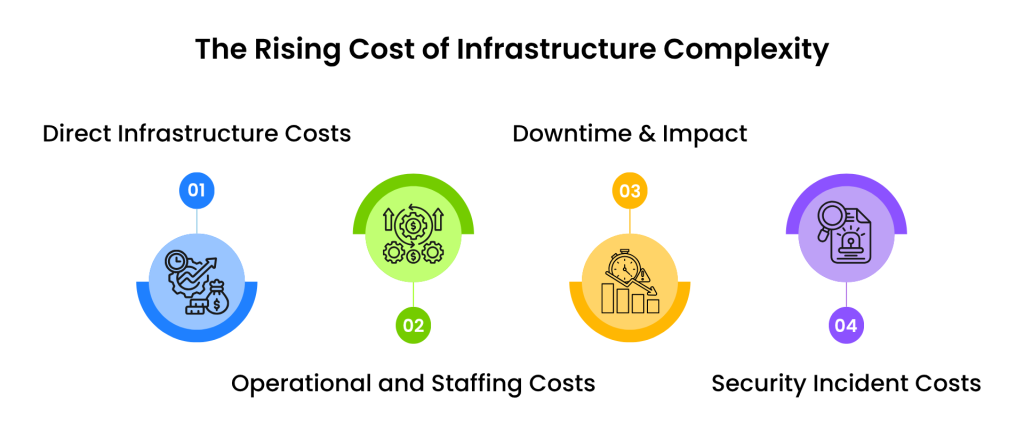
1. Direct Infrastructure Costs
Managing multiple environments means:
- Duplicate resources
- Over-provisioned infrastructure
- Inefficient workload placement
Organizations frequently pay for capacity they don’t fully utilize.
2. Operational and Staffing Costs
Highly complex systems require:
- Specialized skill sets
- Larger operations teams
- Continuous training
The cost of maintaining expertise across multiple platforms can quickly escalate.
3. Downtime & Impact
Complex systems are harder to troubleshoot and recover. This leads to:
- Longer outages
- Revenue loss
- Customer dissatisfaction
4. Security Incident Costs
Security gaps caused by complexity increase the likelihood of breaches, which bring:
- Financial penalties
- Reputational damage
- Recovery expenses
The Case for Simplified Architecture
Reducing complexity is not about limiting capability—it’s about designing for clarity, consistency, and control.
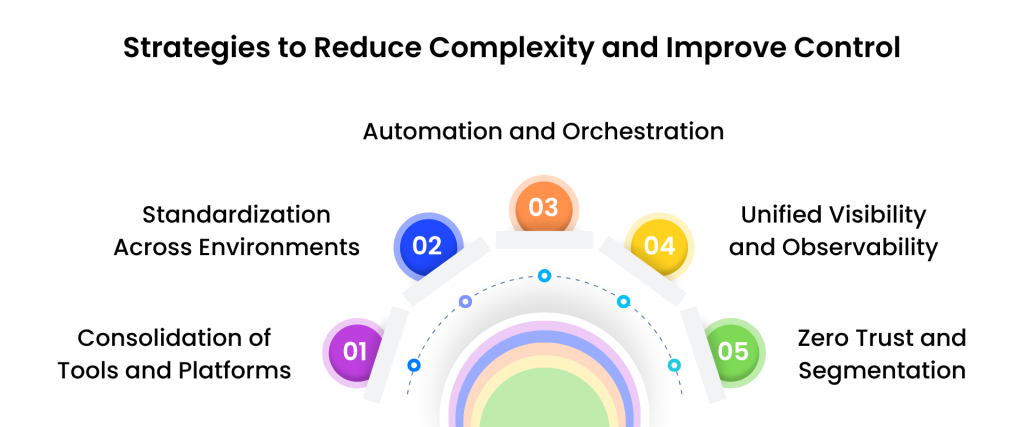
1. Consolidation of Tools and Platforms
Organizations should aim to:
- Reduce overlapping solutions
- Integrate functionalities into unified platforms
- Eliminate redundant systems
This improves visibility and reduces management overhead.
2. Standardization Across Environments
Consistent policies, configurations, and architectures ensure:
- Predictable behavior
- Easier troubleshooting
- Stronger security posture
3. Automation and Orchestration
Automation reduces human intervention and error. Key benefits include:
- Faster deployments
- Consistent policy enforcement
- Real-time response to incidents
4. Unified Visibility and Observability
A centralized visibility layer enables:
- End-to-end monitoring
- Real-time insights
- Faster decision-making
5. Zero Trust and Segmentation
Modern security approaches like Zero Trust enforce:
- Continuous verification
- Least privilege access
- Micro-segmentation
This minimizes the impact of breaches and improves control.
Leadership Dilemma: Control vs Expansion
At the leadership level, network complexity often reflects a deeper strategic tension: the push for rapid expansion versus the need for control.
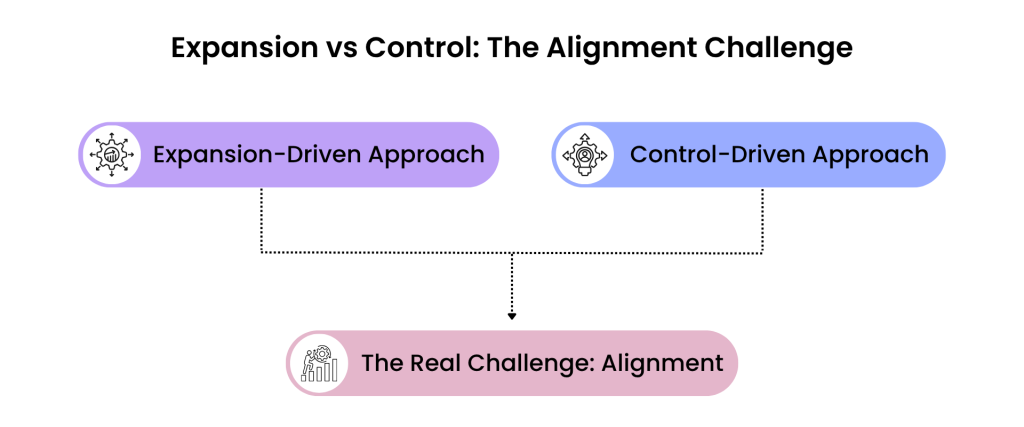
Expansion-Driven Approach
Organizations focused on speed prioritize:
- Rapid cloud adoption
- Fast deployment cycles
- Decentralized decision-making
While this accelerates growth, it often leads to fragmented systems and hidden risks.
Control-Driven Approach
Organizations focused on control emphasize:
- Standardization
- Governance
- Risk management
While this improves stability, it can slow innovation if overdone.
The Real Challenge: Alignment
The issue is not choosing one over the other—it’s balancing both. Leaders must ensure that:
- Growth does not outpace governance
- Innovation does not compromise security
- Complexity does not undermine scalability
Advanced Perspective: Complexity as a Strategic Risk
At an advanced level, network complexity should be treated as a strategic risk factor, not just a technical issue.
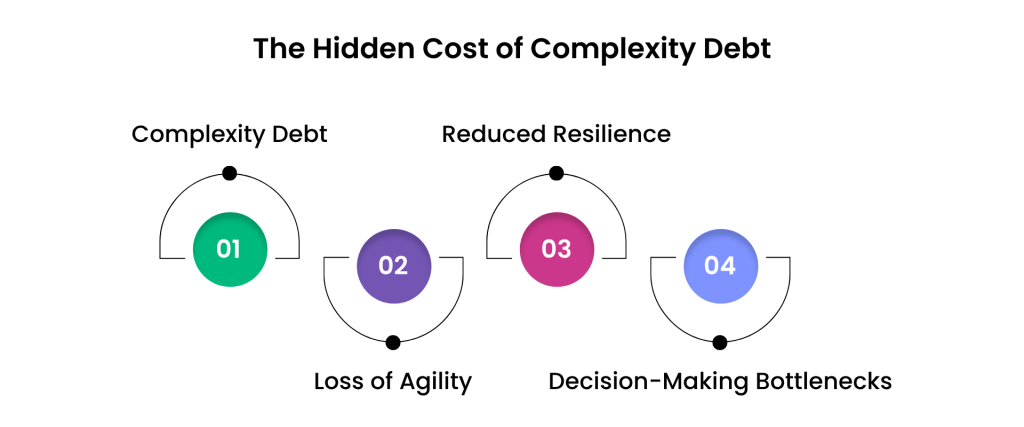
1. Complexity Debt
Similar to technical debt, complexity accumulates over time. Every new tool, integration, or workaround adds to this burden. Without active management, it:
- Slows future innovation
- Increases operational friction
2. Loss of Agility
Ironically, systems designed for agility can become rigid due to complexity. Organizations may find it difficult to:
- Implement changes quickly
- Adapt to new business requirements
3. Reduced Resilience
Highly complex systems are more prone to cascading failures. A single issue can propagate across multiple layers, making recovery more difficult.
4. Decision-Making Bottlenecks
When visibility is limited and systems are fragmented, leaders lack the insights needed for:
- Strategic planning
- Risk assessment
- Investment prioritization
Final Thought
Network complexity is not just an inevitable byproduct of growth—it is a manageable and reducible challenge. Organizations that proactively simplify their architectures, align their strategies, and invest in unified visibility will gain a significant advantage.In a world where infrastructure defines business capability, the real differentiator is not how complex your network is—but how effectively you control and simplify it.