
Introduction
Traditional network architecture was built around a clear perimeter—trusted inside, untrusted outside. That model no longer holds. With cloud adoption, SaaS proliferation, remote work, and distributed applications, the concept of a “network edge” has dissolved.
A boundary-less network architecture is not about removing control—it’s about redefining where and how control exists. It shifts from location-based trust to identity, context, and continuous verification.
1. Segmentation Strategy: From Static Zones to Dynamic Micro-Segmentation
Traditional Limitation
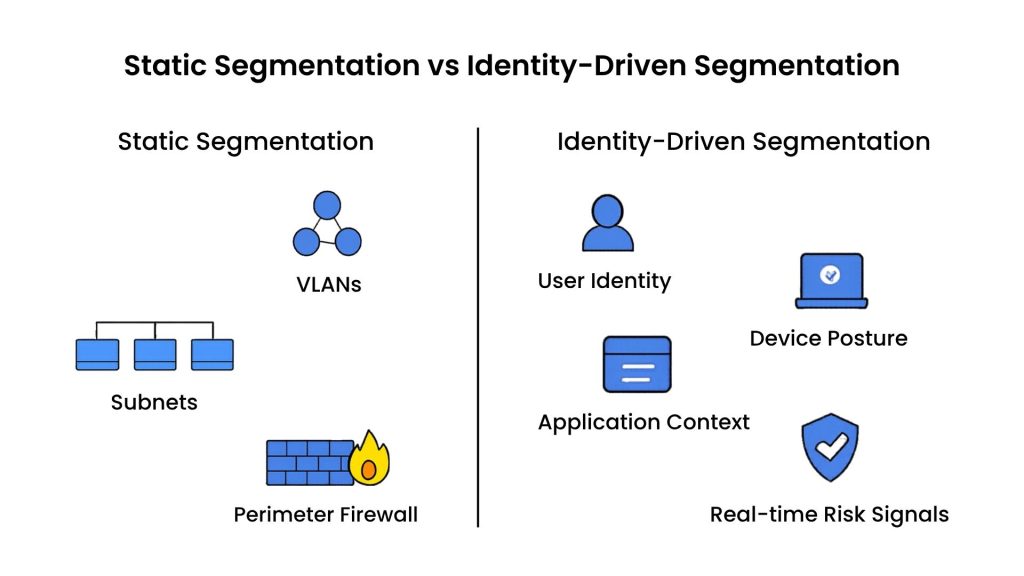
Legacy segmentation relied on:
- VLANs
- Subnets
- Perimeter firewalls
These approaches assume predictable traffic flows and fixed trust zones, which no longer exist.
Advanced Approach: Identity-Driven Segmentation
Modern segmentation must operate on:
- User identity
- Device posture
- Application context
- Real-time risk signals
Key Models
1. Micro-Segmentation
- Granular, workload-level segmentation
- Applied via agents or network overlays
- Policies enforced at workload or host level
2. Software-Defined Segmentation
- Centralized policy definition
- Distributed enforcement across network fabric
3. Zero Trust Segmentation
- No implicit trust between segments
- Every connection is explicitly authenticated and authorized
Design Principles
- Default deny across all segments
- Least privilege communication paths
- Policy abstraction independent of IP addressing
- Dynamic policy updates based on context
2. Visibility Layers: Building Observability Across a Distributed Fabric
The Visibility Problem
Encrypted traffic, multi-cloud environments, and SaaS usage create:
- Blind spots
- Fragmented telemetry
- Delayed threat detection
Layered Visibility Model
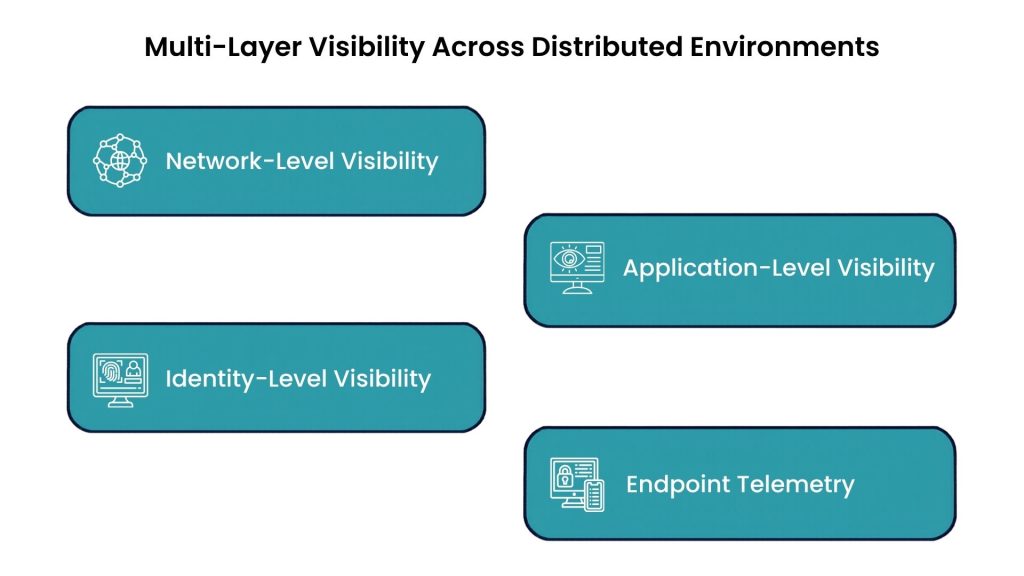
1. Network-Level Visibility
- Flow data (NetFlow, IPFIX)
- East-west traffic monitoring
- Cloud VPC traffic mirroring
2. Application-Level Visibility
- API calls
- Service-to-service communication
- Latency and transaction tracing
3. Identity-Level Visibility
- User behavior analytics
- Device identity tracking
- Access patterns across environments
4. Endpoint Telemetry
- Process-level activity
- File system changes
- Behavioral indicators
Advanced Capability: Unified Telemetry Fabric
A boundary-less architecture requires:
- Centralized data lake for telemetry
- Correlation across layers (network + identity + endpoint)
- AI-driven anomaly detection
- Real-time observability dashboards
3. Traffic Inspection Approach: Continuous, Context-Aware Security
Why Traditional Inspection Fails?
- Perimeter-based inspection misses east-west traffic
- Encryption (TLS 1.3) limits visibility
- Cloud-native traffic bypasses centralized controls
Modern Inspection Strategy
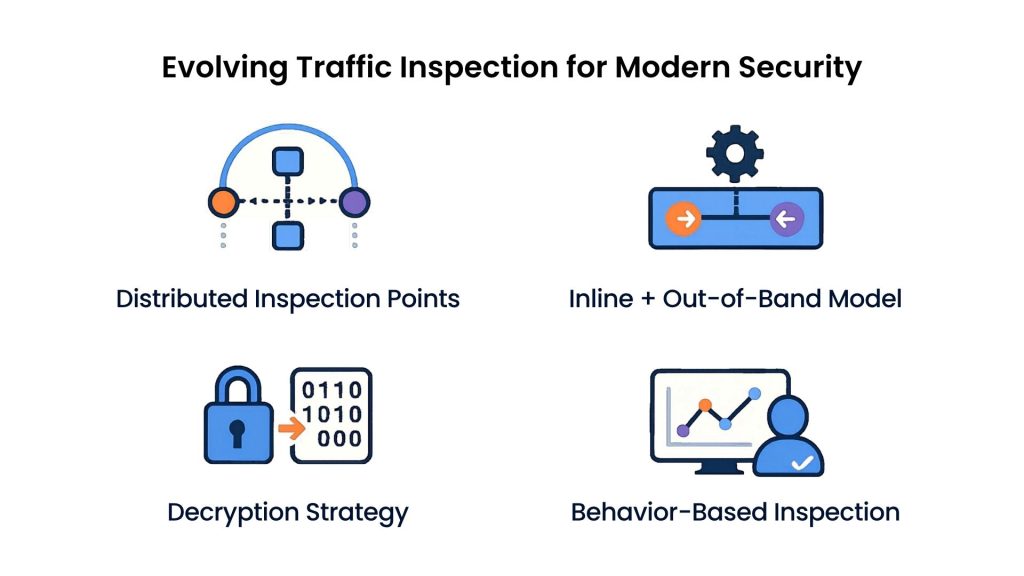
1. Distributed Inspection Points
- Inspection embedded in:
- Endpoints
- Cloud workloads
- Edge devices
2. Inline + Out-of-Band Hybrid Model
- Inline for enforcement (blocking threats)
- Out-of-band for deep analysis and forensics
3. Decryption Strategy
- Selective TLS inspection based on:
- Risk level
- Application type
- Compliance requirements
4. Behavior-Based Inspection
- Move beyond signature-based detection
- Analyze:
- Traffic patterns
- Session anomalies
- Lateral movement indicators
Key Principle
Inspection must be:
- Continuous (not session-based)
- Context-aware (identity + behavior)
- Adaptive (risk-driven policies)
4. Risk Isolation Model: Containing Threats in a Borderless Environment
The Challenge
Without clear boundaries, threats can:
- Move laterally faster
- Exploit implicit trust
- Spread across hybrid environments
Advanced Risk Isolation Framework
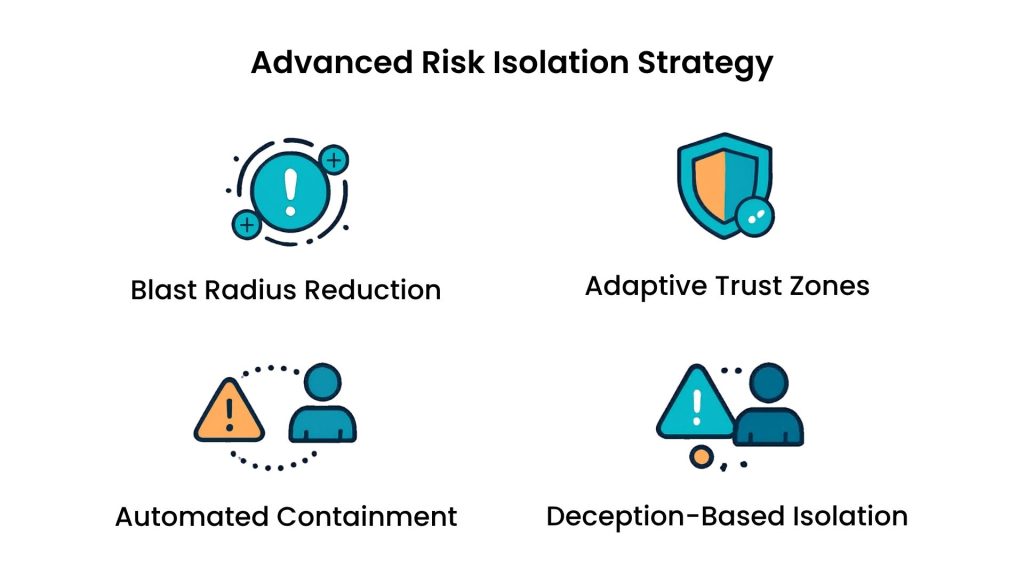
1. Blast Radius Reduction
- Limit impact of compromise to smallest possible unit
- Enforce strict segmentation between workloads
2. Adaptive Trust Zones
- Zones defined dynamically based on:
- Risk score
- Behavior anomalies
- Threat intelligence
3. Automated Containment
- Quarantine compromised endpoints instantly
- Isolate suspicious workloads
- Revoke access tokens dynamically
4. Deception-Based Isolation
- Use honeypots and decoys
- Divert attackers away from critical assets
Outcome
Instead of preventing every breach, the model ensures:
- Breaches are contained
- Damage is minimized
- Recovery is faster
5. Enterprise Architecture Framework: Designing for Scale and Control
Core Architectural Pillars
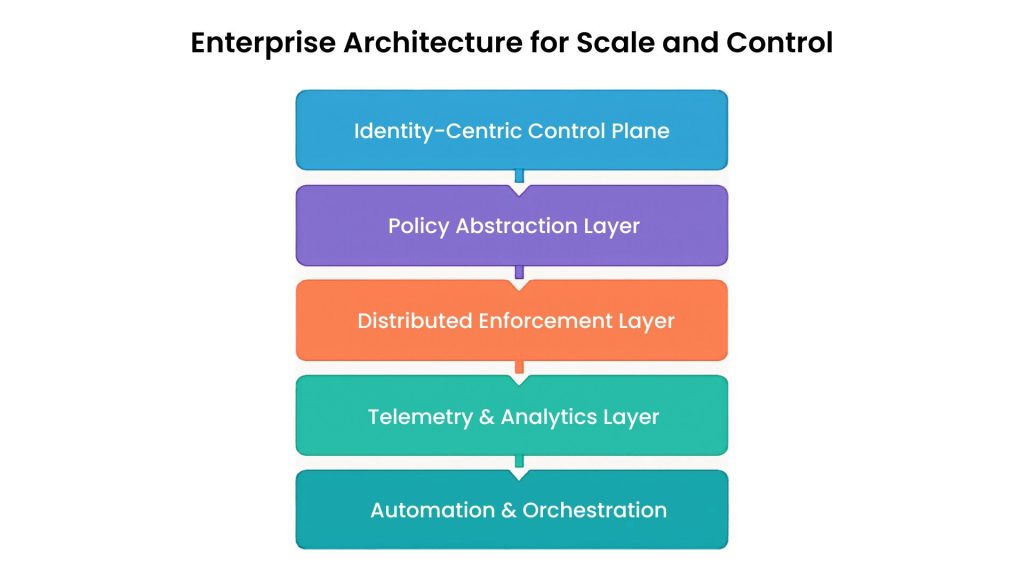
1. Identity-Centric Control Plane
- Identity becomes the new perimeter
- Integration with IAM, SSO, MFA systems
- Continuous authentication and authorization
2. Policy Abstraction Layer
- Centralized policy definition
- Decoupled from infrastructure
- Applied consistently across:
- On-prem
- Cloud
- Edge
3. Distributed Enforcement Layer
- Enforcement pushed closer to:
- Users
- Devices
- Workloads
4. Telemetry and Analytics Layer
- Unified data ingestion
- Real-time analytics
- Threat intelligence integration
5. Automation and Orchestration
- Policy automation
- Incident response automation
- Self-healing network capabilities
Reference Architecture Flow
- User/device requests access
- Identity verified + posture checked
- Policy engine evaluates context
- Access granted with least privilege
- Traffic continuously inspected
- Behavior monitored in real-time
- Risk detected → automated isolation triggered
Key Design Principles for Boundary-Less Architecture
- Never trust, always verify
- Assume breach mindset
- Shift from perimeter to identity
- Move control closer to assets
- Correlate signals across layers
- Automate everything possible
Common Pitfalls to Avoid
- Over-segmentation without visibility
- Centralized inspection creating bottlenecks
- Ignoring encrypted traffic risks
- Lack of integration between tools
- Treating Zero Trust as a product, not an architecture
Final Thought
A boundary-less network is not less secure—it is more intentional.
Security is no longer about building stronger walls.
It’s about designing intelligent control systems that operate everywhere, continuously, and contextually.
The organizations that succeed will be those that:
- Replace static trust with dynamic verification
- Combine visibility with automation
- Design for containment, not just prevention
In a world without boundaries, architecture becomes your strongest defense.