
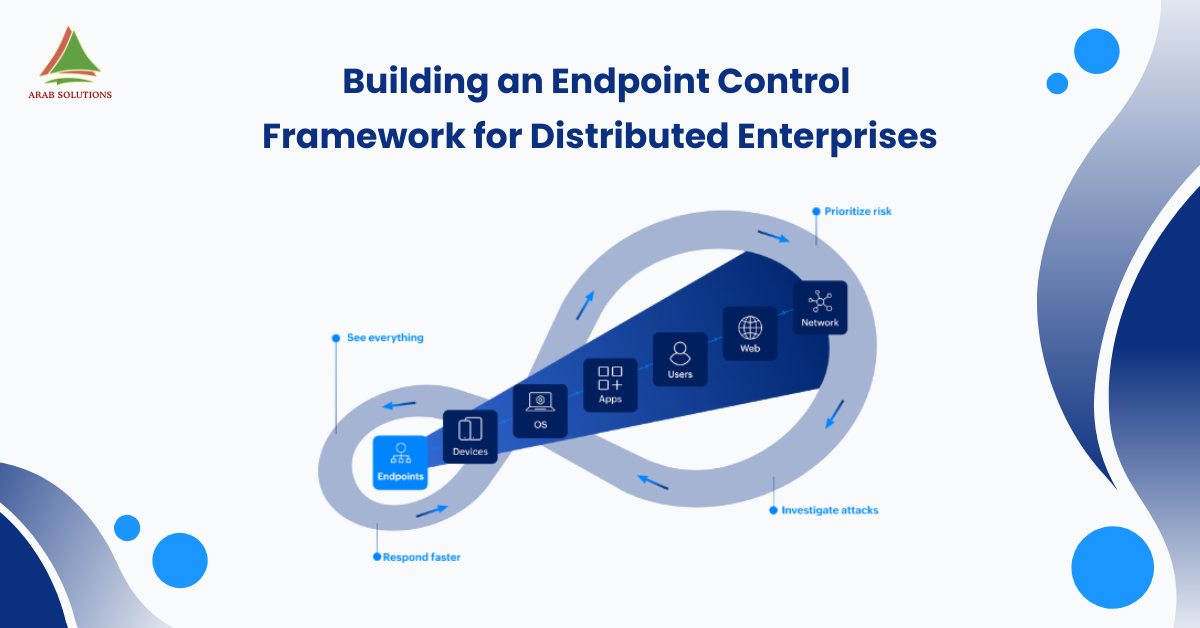
Introduction: Why Endpoint Control Needs a Rethink?
Enterprise environments have changed faster than most security strategies. Employees now work across home networks, shared workspaces, and cloud-based platforms. Devices connect from different locations, often outside traditional IT oversight.
This shift has made endpoints the most exposed layer in modern infrastructure. Laptops, mobile devices, and even third-party systems are now primary entry points for security incidents.
A strong endpoint control framework is no longer optional—it’s a foundational requirement for maintaining operational stability and protecting business assets.
The Challenge: Fragmented Visibility and Control
In distributed environments, organizations struggle with:
- Limited visibility into all connected devices
- Inconsistent security policies across locations
- Lack of correlation between users and devices
- Delayed detection of suspicious behavior
- Difficulty prioritizing real risks over noise
Without a structured framework, endpoint management becomes reactive instead of controlled and predictable.
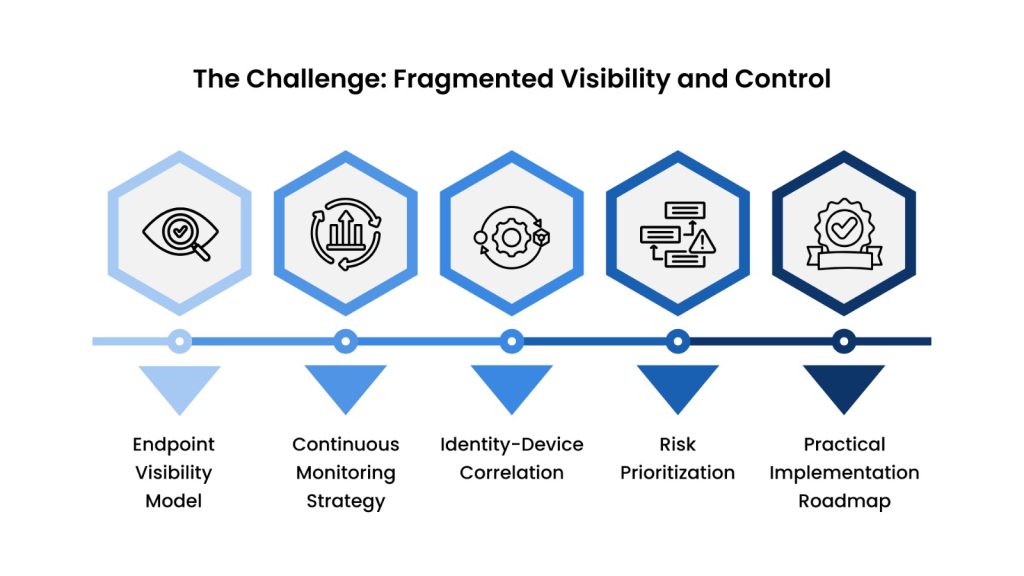
1. Endpoint Visibility Model: Knowing What Exists
You cannot control what you cannot see. A reliable endpoint visibility model forms the base of any control framework.
Key Components:
- Comprehensive asset discovery: Identify all endpoints, including unmanaged and third-party devices
- Device classification: Categorize endpoints based on ownership, usage, and criticality
- Real-time inventory updates: Maintain an always-current view of connected devices
Practical Approach:
- Integrate endpoint detection tools with directory services
- Use network-based discovery alongside agent-based visibility
- Track device lifecycle—from onboarding to decommissioning
Visibility should not be a one-time exercise. It must remain continuous and adaptive.
2. Continuous Monitoring Strategy: Moving Beyond Snapshots
Periodic checks are no longer sufficient. Endpoint activity must be monitored continuously to detect anomalies early.
What to Monitor:
- Login patterns and access behavior
- Device health and configuration changes
- Application usage and process activity
- Network connections and data transfers
Key Principle:
Focus on behavior over static rules. Known threats are easier to block; unknown patterns require observation and context.
Implementation Tips:
- Establish baseline behavior for users and devices
- Set thresholds for deviations rather than rigid rules
- Integrate alerts with incident response workflows
Continuous monitoring helps reduce response time and limits potential damage.
3. Identity-Device Correlation: Connecting the Dots
In distributed systems, identity becomes the new control layer. However, identity alone is not enough—it must be tied to the device being used.
Why It Matters:
- A valid user on an untrusted device is still a risk
- Compromised credentials can appear legitimate without device context
- Access decisions should consider both identity and device posture
Key Elements:
- Map users to their authorized devices
- Validate device compliance before granting access
- Track session-level behavior across devices
Example:
A user logging in from a recognized device with consistent behavior is lower risk than the same user accessing from a new, unmanaged system.
This correlation strengthens access control and reduces blind spots.
4. Risk Prioritization: Focusing on What Matters
Not all alerts require the same level of attention. A mature framework prioritizes risks based on impact and likelihood.
Risk Factors to Consider:
- Sensitivity of accessed data
- Device trust level
- User privilege level
- Behavioral anomalies
Practical Model:
- Assign risk scores to endpoints and sessions
- Group alerts based on severity and context
- Automate responses for low-risk scenarios
- Escalate high-risk events for immediate action
Outcome:
Security teams spend less time on noise and more time addressing real threats.
5. Practical Implementation Roadmap
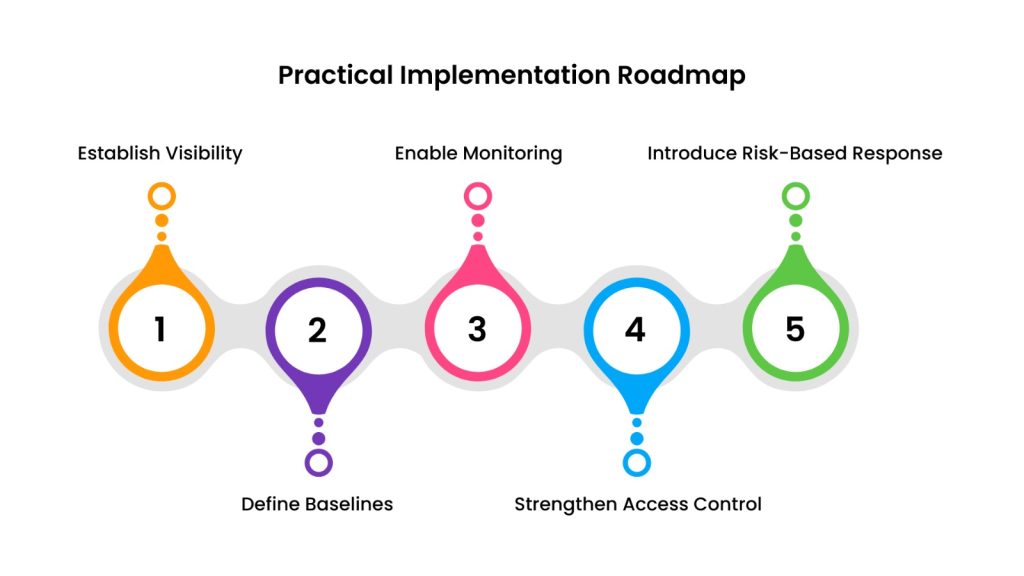
Building an endpoint control framework requires a phased approach. Attempting everything at once often leads to gaps and inefficiencies.
Phase 1: Establish Visibility
- Deploy endpoint discovery tools
- Create a centralized asset inventory
- Identify unmanaged and unknown devices
Phase 2: Define Baselines
- Document normal user and device behavior
- Standardize configurations and policies
- Set compliance benchmarks
Phase 3: Enable Monitoring
- Implement continuous monitoring solutions
- Integrate logs from endpoints, identity systems, and networks
- Define alert thresholds
Phase 4: Strengthen Access Control
- Enforce device-based access validation
- Apply least-privilege principles
- Introduce conditional access policies
Phase 5: Introduce Risk-Based Response
- Implement risk scoring models
- Automate containment for high-risk endpoints
- Align response processes with business priorities
Additional Considerations for a Strong Framework
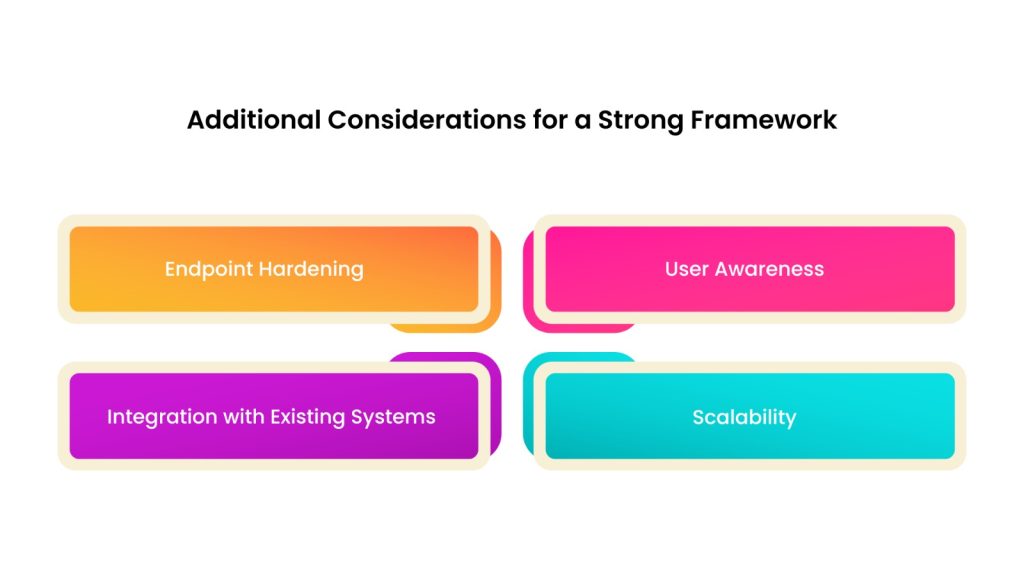
1. Endpoint Hardening
Ensure devices follow secure configuration standards, including patch management and restricted administrative access.
2. User Awareness
Even the best controls fail if users are unaware of risks. Regular training reduces exposure from phishing and unsafe practices.
3. Integration with Existing Systems
Your endpoint framework should align with:
- Identity and access management systems
- Security operations workflows
- Incident response processes
4. Scalability
Design the framework to support growth—new users, devices, and locations should be easy to onboard without weakening control.
Conclusion: From Control Gaps to Control Confidence
Distributed enterprises require a shift in how endpoint security is approached. Static controls and fragmented visibility are no longer sufficient.
A well-structured endpoint control framework brings together visibility, monitoring, identity correlation, and risk prioritization into a unified model. This not only improves security posture but also enables smoother operations across a distributed workforce.
Organizations that invest in structured endpoint control today will be better positioned to manage complexity, reduce risk exposure, and maintain trust in their systems.