
Introduction: Why AI Governance Needs a Structured Approach
Artificial Intelligence is becoming a core component of enterprise operations—powering decisions, automating workflows, and driving efficiency at scale.
But as organizations move from experimentation to widespread adoption, a critical challenge emerges:
How do you control something that continuously evolves?
Unlike traditional systems, AI introduces dynamic risks—shaped by data, models, and external dependencies. Without a structured governance framework, organizations risk losing visibility, control, and accountability.
This is where a practical AI governance model becomes essential—not as a theoretical concept, but as an operational necessity.
What Is an Enterprise AI Governance Framework?
An AI governance framework is a structured approach to managing how AI systems are:
- Designed
- Deployed
- Monitored
- Controlled
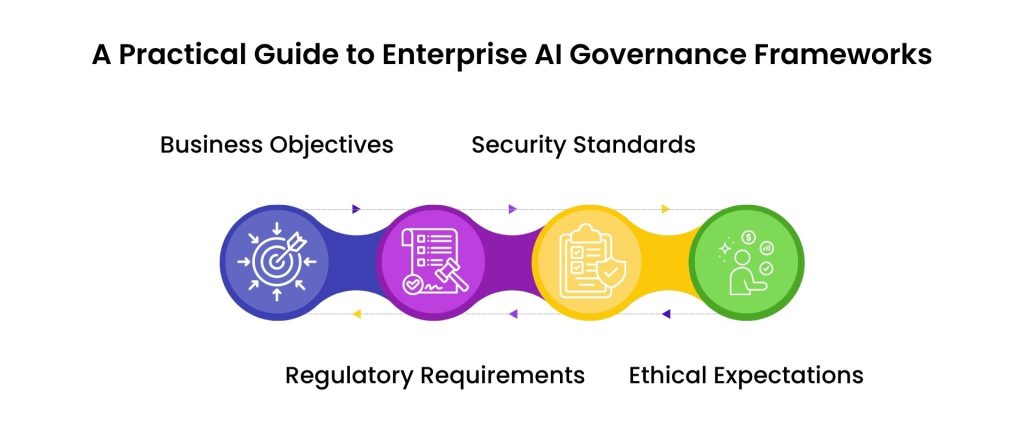
It ensures that AI aligns with:
- Business objectives
- Regulatory requirements
- Security standards
- Ethical expectations
Most importantly, it transforms AI from a technical initiative into a governed enterprise capability.
1. AI Policy Architecture: Setting the Foundation
Every effective governance model begins with clearly defined policies.
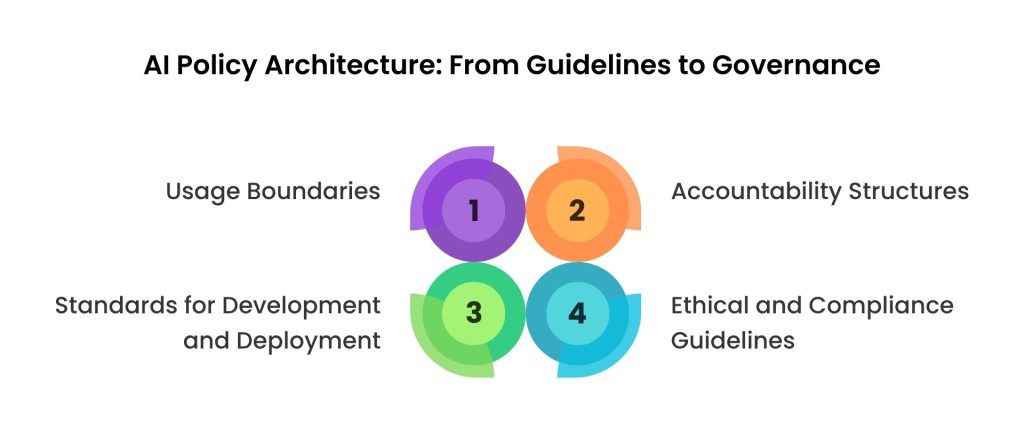
AI Policy Architecture Establishes:
- Usage boundaries (where AI can and cannot be applied)
- Accountability structures (who owns AI decisions and risks)
- Standards for development and deployment
- Ethical and compliance guidelines
What a Strong AI Policy Framework Includes:
- Clear classification of AI use cases (low, medium, high risk)
- Defined approval workflows for AI deployment
- Guidelines for data usage and model training
- Documentation and audit requirements
Why It Matters:
Without structured policies, AI adoption becomes inconsistent—leading to fragmented controls and unmanaged risks.
Insight:
Policy is not about restriction. It is about creating clarity at scale.
2. Monitoring & Compliance Layers: From Visibility to Control
AI systems cannot be governed effectively without continuous monitoring.
Unlike static applications, AI models evolve over time—making real-time visibility critical.
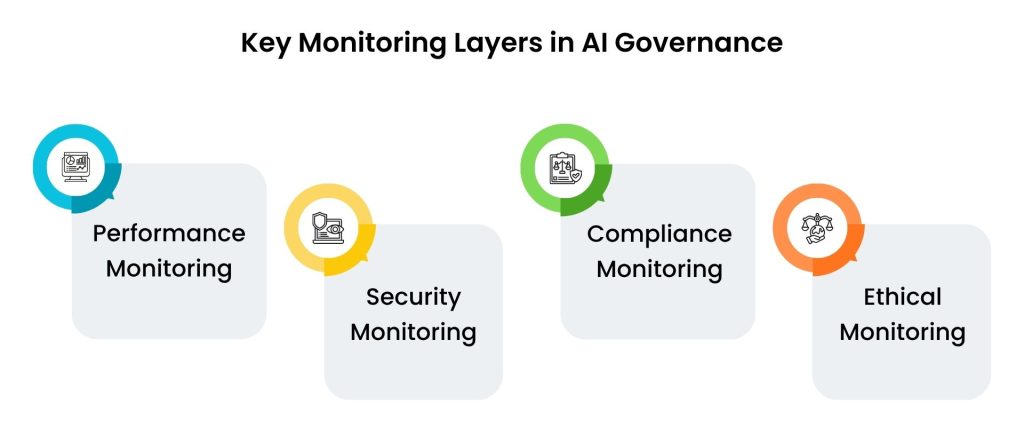
Key Monitoring Layers in AI Governance:
a. Performance Monitoring
Tracks accuracy, reliability, and output consistency over time
b. Compliance Monitoring
Ensures alignment with regulatory, legal, and internal policy requirements
c. Security Monitoring
Identifies vulnerabilities, unauthorized access, or abnormal behavior
d. Ethical Monitoring
Detects bias, unfair outcomes, or unintended consequences
Building an Effective Monitoring Strategy:
- Implement automated monitoring tools across AI systems
- Establish alert mechanisms for anomalies or threshold breaches
- Conduct periodic audits and validation reviews
- Maintain logs for traceability and accountability
Why It Matters:
Monitoring transforms governance from a one-time activity into a continuous process.
Insight:
You cannot control what you cannot see—and in AI, visibility must be continuous.
3. Risk Scoring Methodology: Prioritizing What Matters Most
Not all AI systems carry the same level of risk.
A chatbot handling general queries is very different from an AI model making financial or healthcare decisions.
This is where a risk scoring methodology becomes essential.
How AI Risk Scoring Works:
AI systems are evaluated based on key risk dimensions such as:
- Data sensitivity (personal, financial, operational)
- Decision impact (low vs high consequence outcomes)
- Model complexity (simple rules vs advanced machine learning)
- Regulatory exposure (industry-specific compliance requirements)
- Third-party dependencies
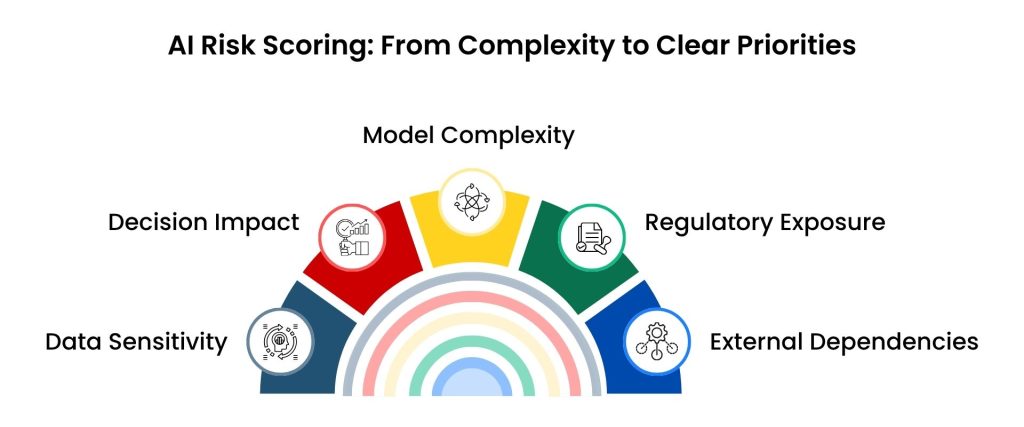
Each factor is assigned a score, resulting in an overall risk rating.
Example Risk Classification:
- Low Risk: Internal automation tools with minimal impact
- Medium Risk: Customer-facing applications with moderate decision influence
- High Risk: Systems affecting financial, legal, or safety-critical outcomes
Why It Matters:
Risk scoring allows organizations to:
- Focus resources where risk is highest
- Apply stricter controls to critical systems
- Avoid over-regulating low-risk use cases
Insight:
Effective governance is not about controlling everything equally—it’s about controlling the right things more rigorously.
4. Integration with Enterprise Security Ecosystem
AI governance cannot operate in isolation.
It must be fully integrated into the organization’s existing:
- Cybersecurity framework
- Risk management processes
- IT infrastructure
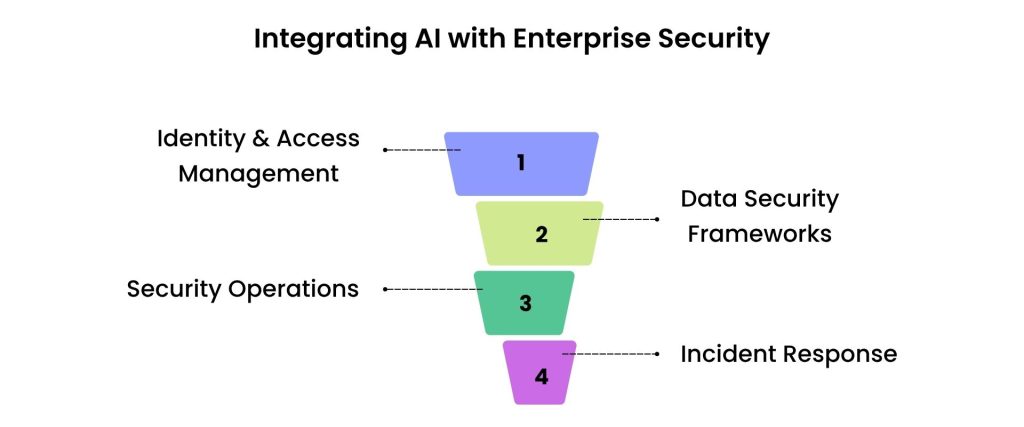
Key Integration Points:
a. Identity & Access Management (IAM)
Control who can access AI models, data, and outputs
b. Data Security Frameworks
Ensure encryption, protection, and compliance for AI-related data
c. Security Operations (SOC)
Monitor AI systems for anomalies and potential threats
d. Incident Response
Extend response plans to include AI-specific failures or risks
Why It Matters:
AI systems expand the attack surface. Without integration, they can become unmonitored entry points within the enterprise.
Insight:
AI governance is not a separate layer—it is an extension of enterprise security.
5. Governance Operating Model: Making It Work in Practice
A framework is only effective if it is operationalized.
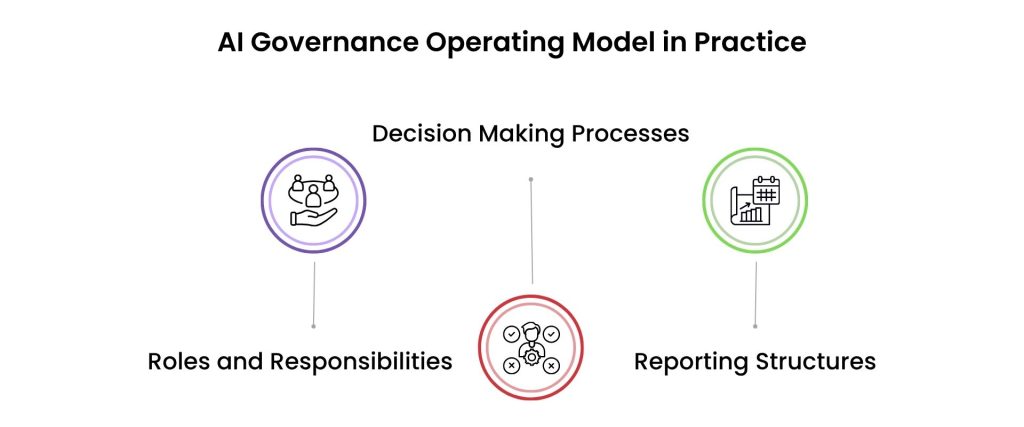
Organizations need a clear governance operating model that defines:
- Roles and responsibilities
- Decision-making processes
- Reporting structures
Key Components:
- AI Governance Committee (cross-functional oversight)
- Defined executive ownership
- Regular reporting to leadership/board
- Standardized workflows for approvals and audits
Why It Matters:
Governance without ownership leads to inconsistency.
Ownership without structure leads to inefficiency.
6. Continuous Improvement: Adapting to Change
AI environments evolve—new models, new risks, new regulations.
Governance frameworks must evolve with them.
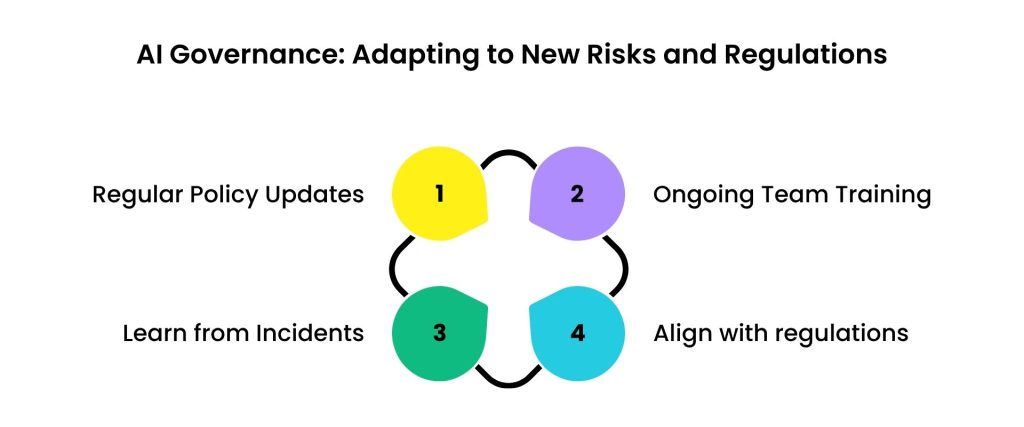
Best Practices:
- Periodic review and update of AI policies
- Continuous training and awareness for teams
- Incorporation of lessons learned from incidents
- Alignment with emerging regulatory and industry standards
Why It Matters:
Static governance models fail in dynamic environments.
Insight:
AI governance is not a one-time implementation—it is a continuous capability.
Conclusion: From Framework to Strategic Advantage
An effective AI governance framework does more than reduce risk.
It enables:
- Faster, safer AI adoption
- Better decision-making
- Increased stakeholder trust
- Long-term scalability
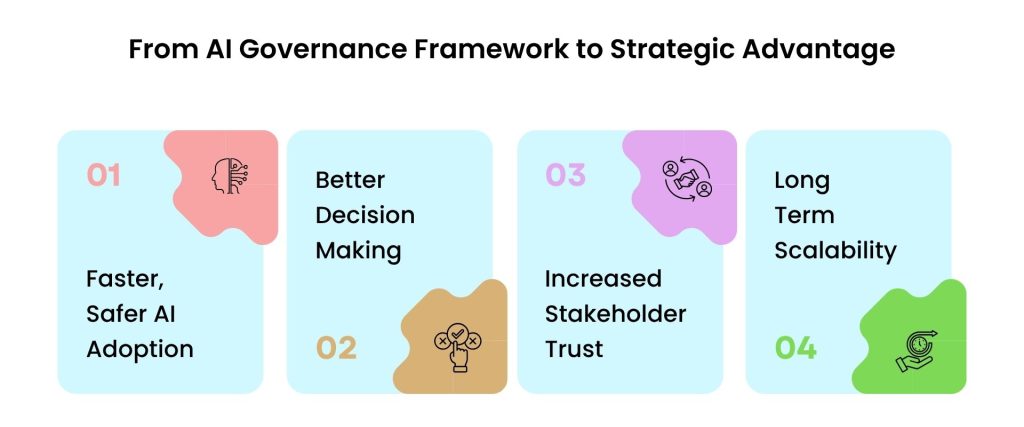
Organizations that invest in structured governance today will not only avoid risk—but gain a competitive advantage.
Because in enterprise AI:
Control is not a limitation.
It is what makes scale possible.